Chemical-resistant floor coatings that protect concrete in shops, labs, plants and garages from acids, bases, fuels and cleaners with seamless polyurea and polyaspartic systems.
Bare concrete is porous and reacts with acids. A coating adds a barrier, but no coating resists everything. The right choice depends on what spills and how long it sits. Polyurea and polyaspartic systems handle many fuels, oils, salts and cleaners, while stronger acids or solvents may need specialty linings. In Nashville shops, plants and labs, picking the right system takes a conversation, not a guess, and that is why we start by asking what is on your floor.
We gather a list of chemicals, concentrations and contact times, then check them against the system's resistance data. For many shop and garage fluids, a polyaspartic or polyurea topcoat is a good fit. For heavy exposure, we may suggest a thicker build, a chemical-resistant resin or a lining. We prepare the slab, repair joints and cracks and apply the system with attention to edges, drains and curbs. We also explain what to do after a spill: wipe it up promptly, rinse with a suitable cleaner and avoid letting harsh chemicals sit.
We start from what is on your floor.
Systems are chosen from resistance information.
Heavier exposure gets a heavier system.
No coating resists every chemical.
We start from what is on your floor.
Systems are chosen from resistance information.
Heavier exposure gets a heavier system.
Curbs and drains get extra care.
You learn how to respond after a spill.
No coating resists every chemical.
Every topic has its own page with what to expect and how we approach it.
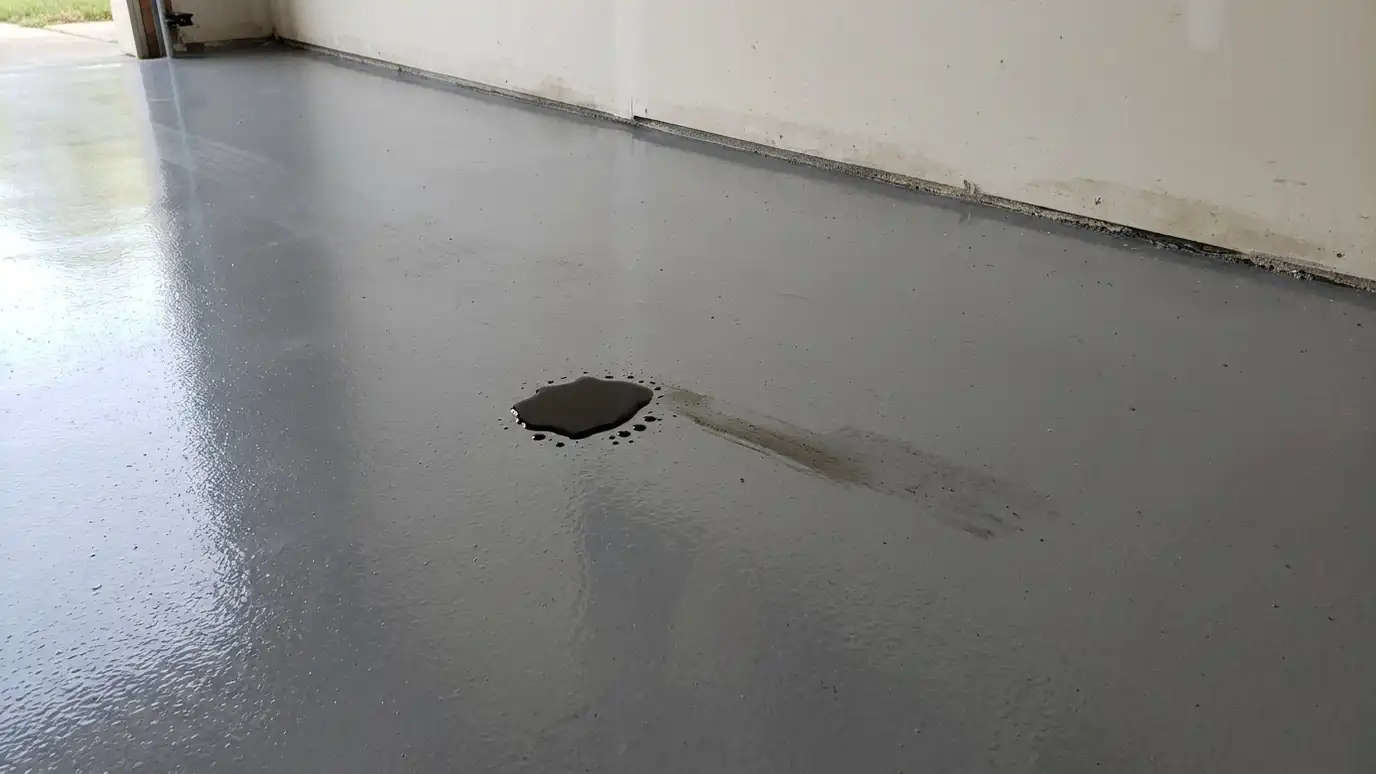 Comparison guideHot Tires and Stain ResistanceHow coatings handle warm tires, oil, brake fluid, salt and cleaners, and what to do after a spill.Learn more
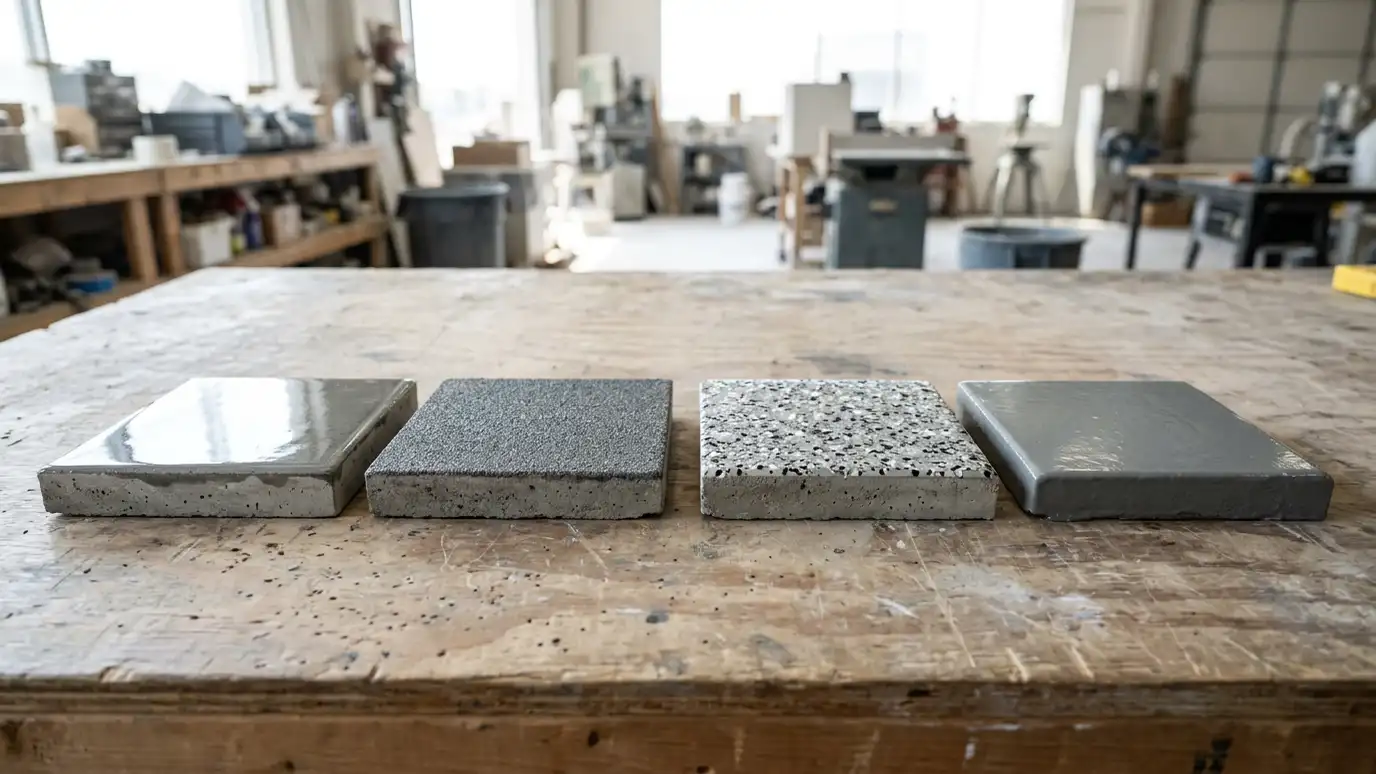 Comparison guideCommercial Systems ComparedHow thin-film, flake, broadcast aggregate and high-build systems differ for shops, kitchens, plants and showrooms.Learn more
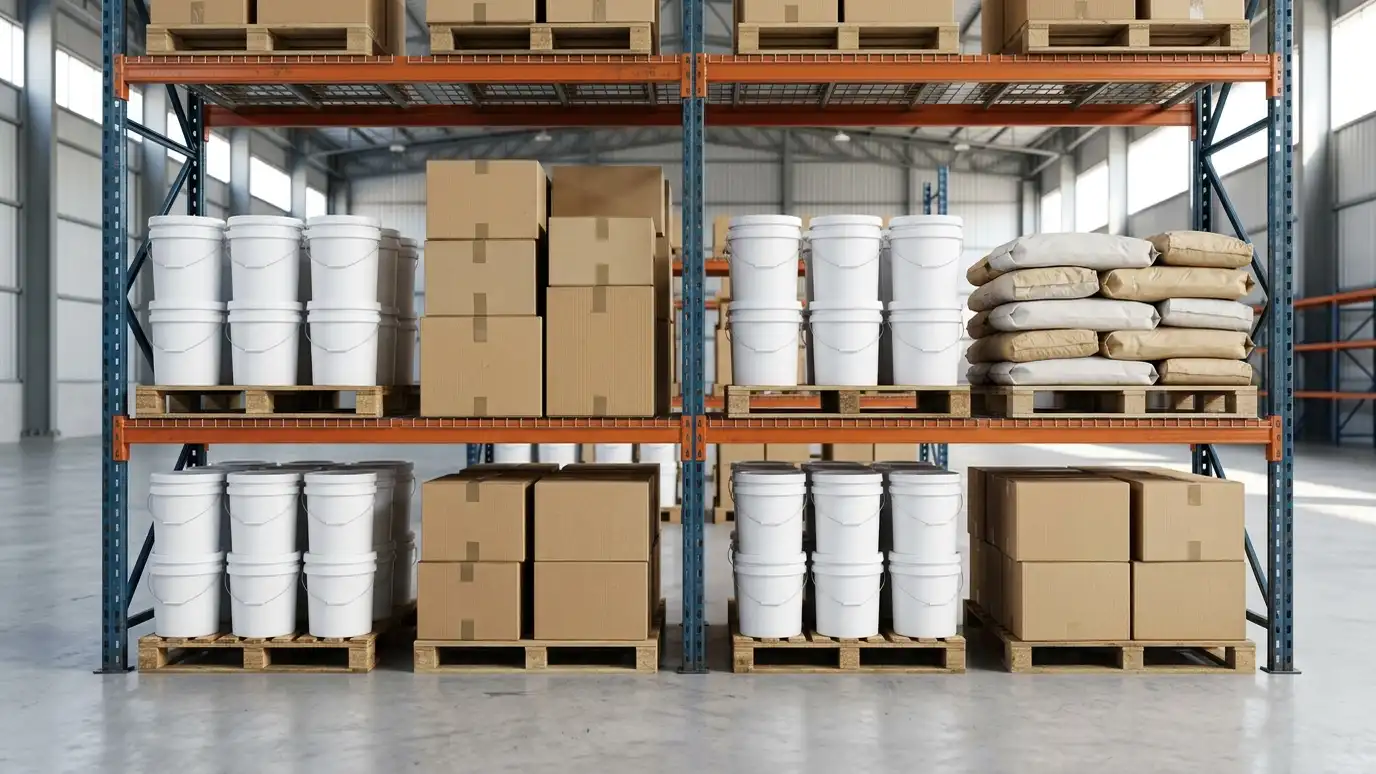 ResourceSikaA construction chemicals company that makes flooring systems, sealants, waterproofing and concrete products.Learn more
Answer five questions about your floor, goals and timing to see which services to start with.
You tell us what you want to coat, how you use the space and what bothers you about the floor, and we set a visit.
We measure the floor, check cracks, stains and moisture, take photos and talk through colors and finishes.
You review samples, a design preview and a plain written scope with every layer and the schedule before anything is ordered.
We clear and protect the space, diamond grind the slab, repair cracks and joints and clean the surface.
We apply the basecoat, broadcast flakes or color and roll the clear topcoat, then give you a cure schedule.
We walk the finished floor with you, share a care guide and schedule a first checkup.
Some systems resist certain acids at some strengths. We check each chemical against data.
Battery acid is harsh, so we discuss it carefully and recommend prompt cleanup.
Short contact at normal dilutions is usually fine, but long exposure can dull a finish.
Some solvents soften coatings. We review which ones you use.
Send us the data sheet and we will advise honestly.
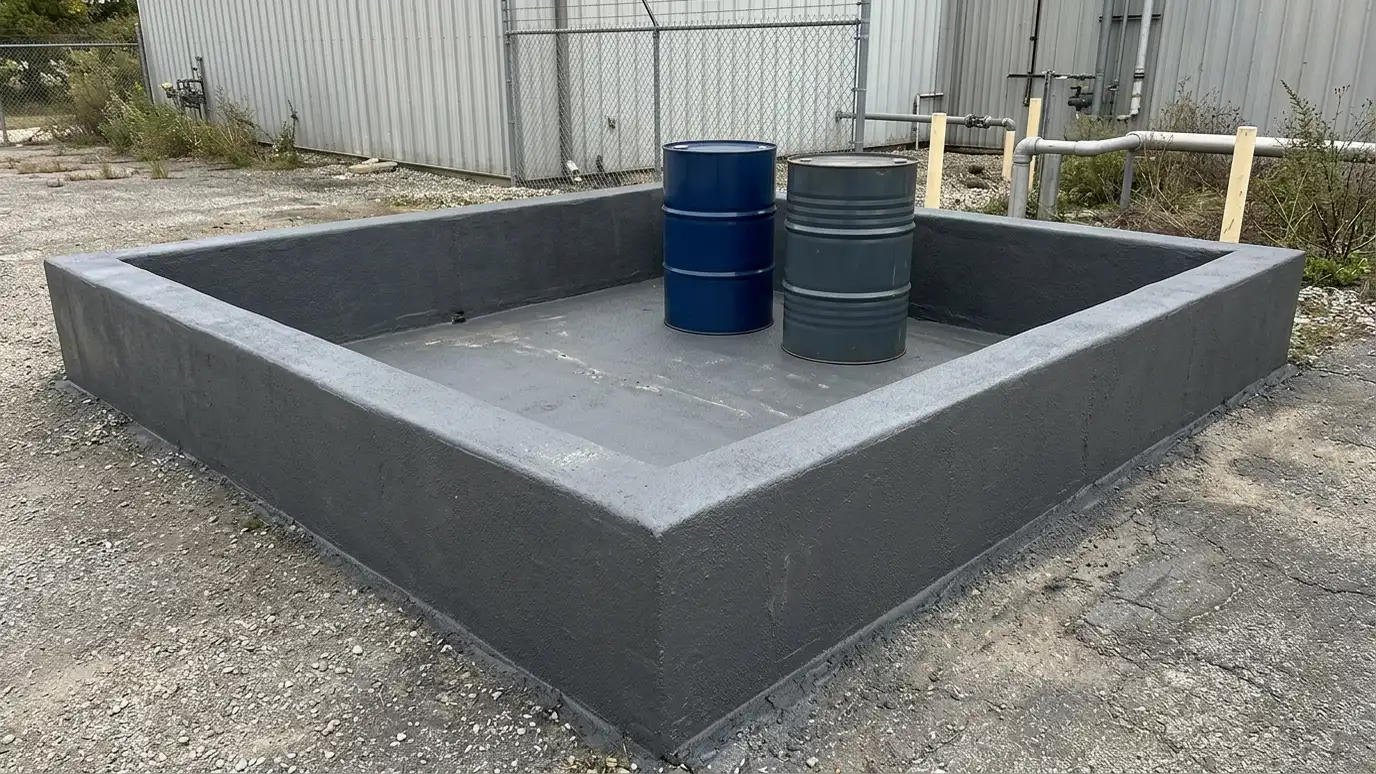 Polyurea Secondary ContainmentPolyurea secondary containment linings that coat curbs, basins and floors around tanks and drums with a seamless, chemical-resistant…Explore
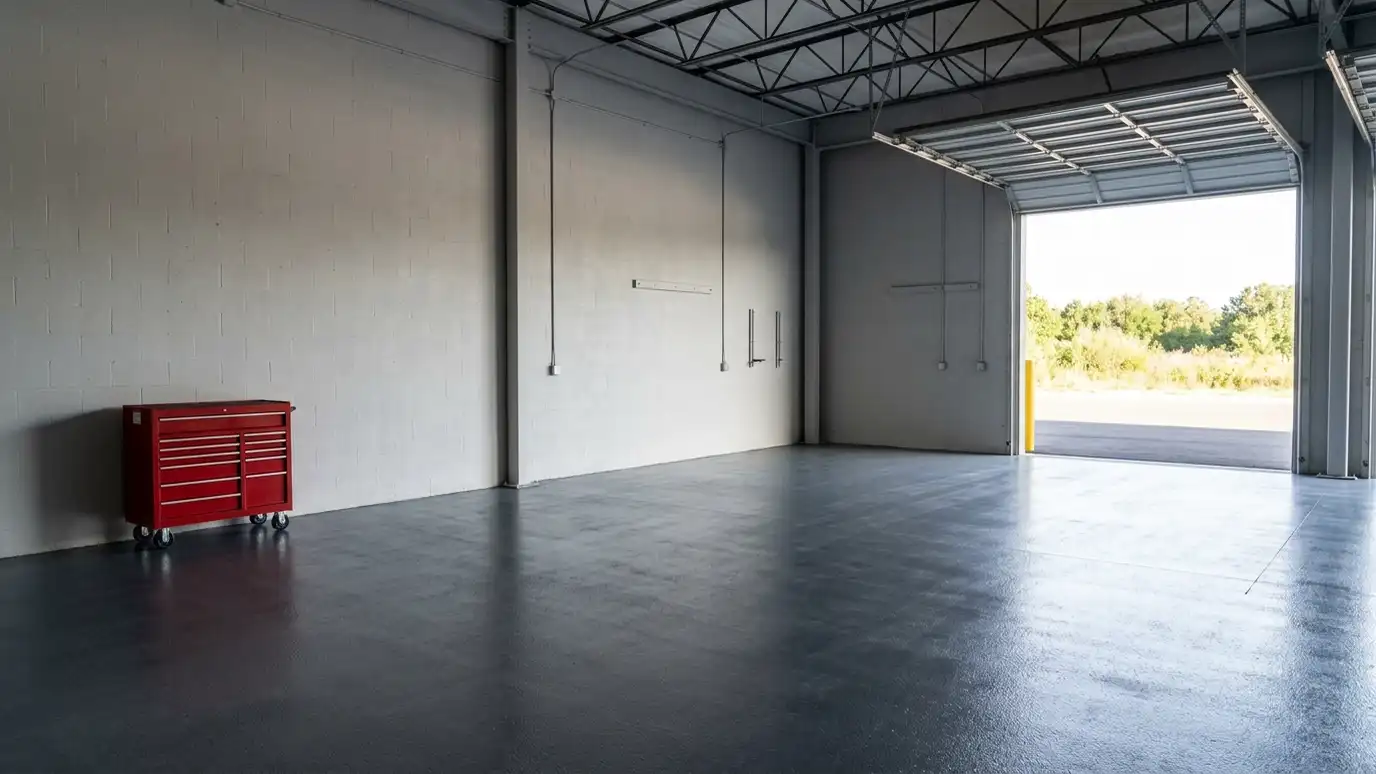 Auto Repair Shop FloorsAuto repair shop floors coated with chemical-resistant polyaspartic and polyurea systems that handle oil, brake fluid, coolant, tires…Explore
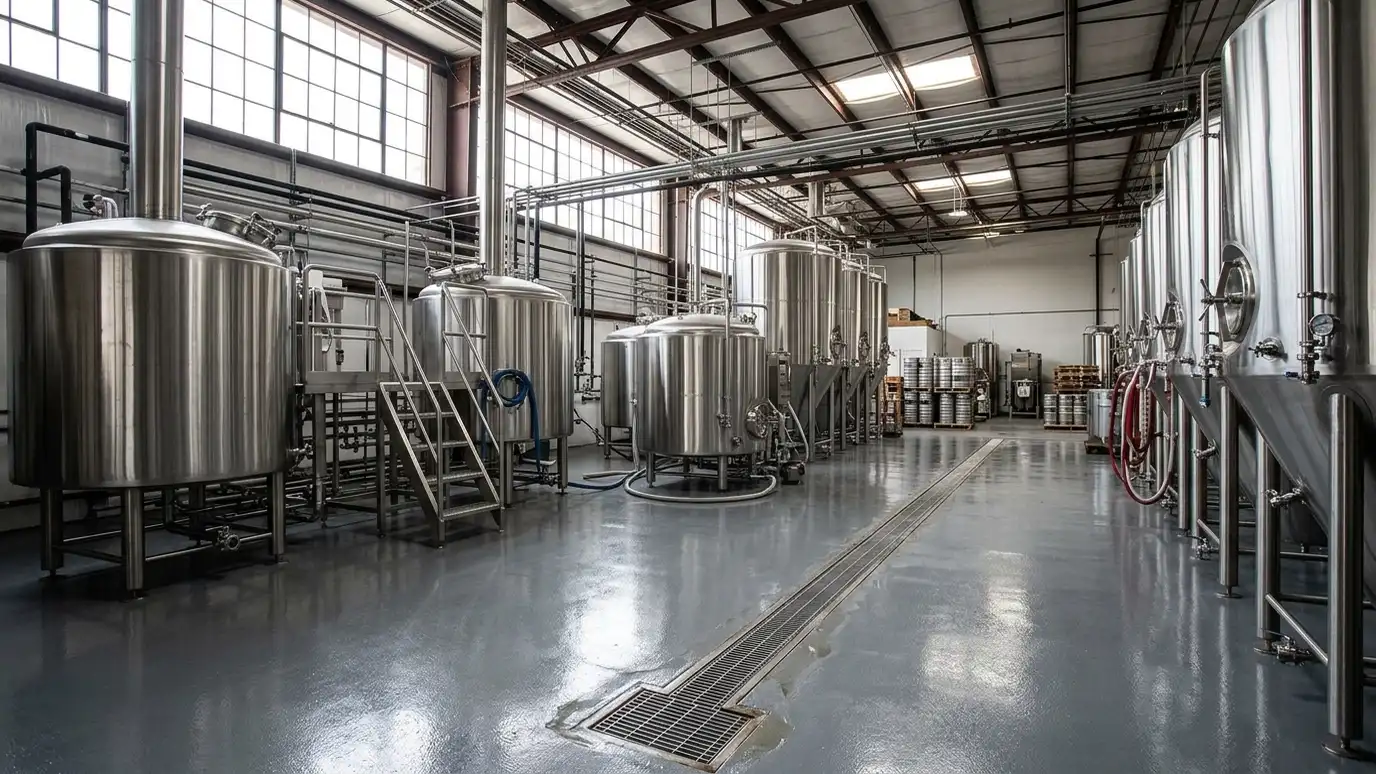 Brewery and Distillery FloorsBrewery and distillery floors coated with seamless, chemical-resistant, drain-friendly systems that handle water, sugars, cleaners, CIP chemicals and…Explore
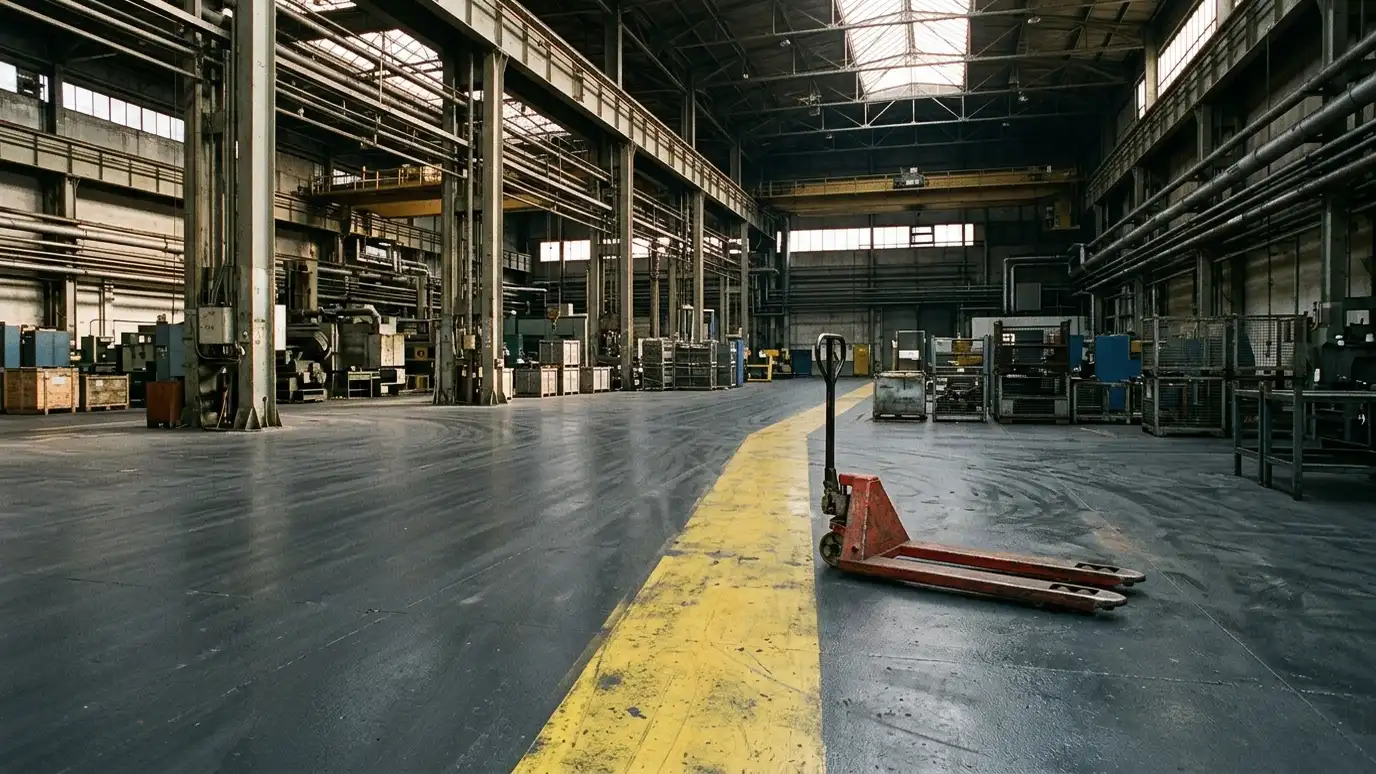 Heavy-Duty Industrial Polyurea FloorsHeavy-duty industrial polyurea floors with thick-build, impact-resistant systems for plants, shops and yards where forklifts, pallets and equipment…Explore
Tell us about your floor and we will call you back to set up a visit.
Or call (615) 357-7797 to talk now.