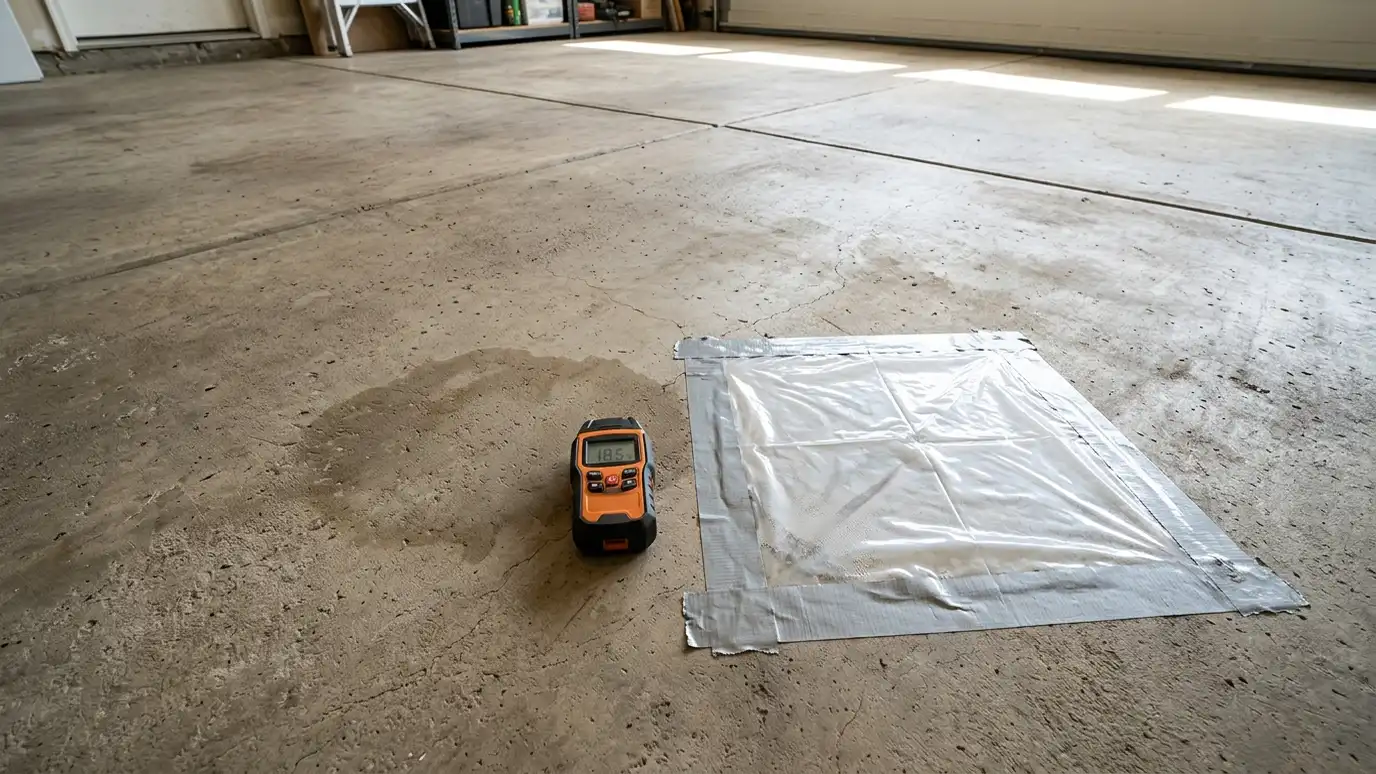
How moisture vapor moves through slabs, how it is tested and what it can do to a coating.
Concrete looks solid, but it holds water and can release moisture vapor for years. If that vapor is trapped under a sealed coating, it can cause bubbles, blisters and peeling. Moisture comes from the ground, from rain that pools against the garage and from humid air meeting a cool slab. Testing before you coat shows whether the slab is ready or needs a moisture-mitigating primer, and it is one of the most useful steps in a floor project.
Common tests include a taped plastic sheet, calcium chloride kits and probes that measure humidity inside the slab. Each has strengths, and using more than one gives a better picture. Nashville gets heavy spring rain and humid summers, and clay soils hold water, so slabs on grade are often wetter than owners expect. If readings are high, a vapor-blocking primer can help. If the cause is a leak or poor drainage, fixing that comes first. Honest testing prevents expensive redo work.
Ground water, rain and humid air all play a part.
A quick check for moisture under a taped square.
Measures vapor emission over a set time.
Measure relative humidity inside the slab.
Slow vapor so coatings can bond.
Drainage and leaks come first.
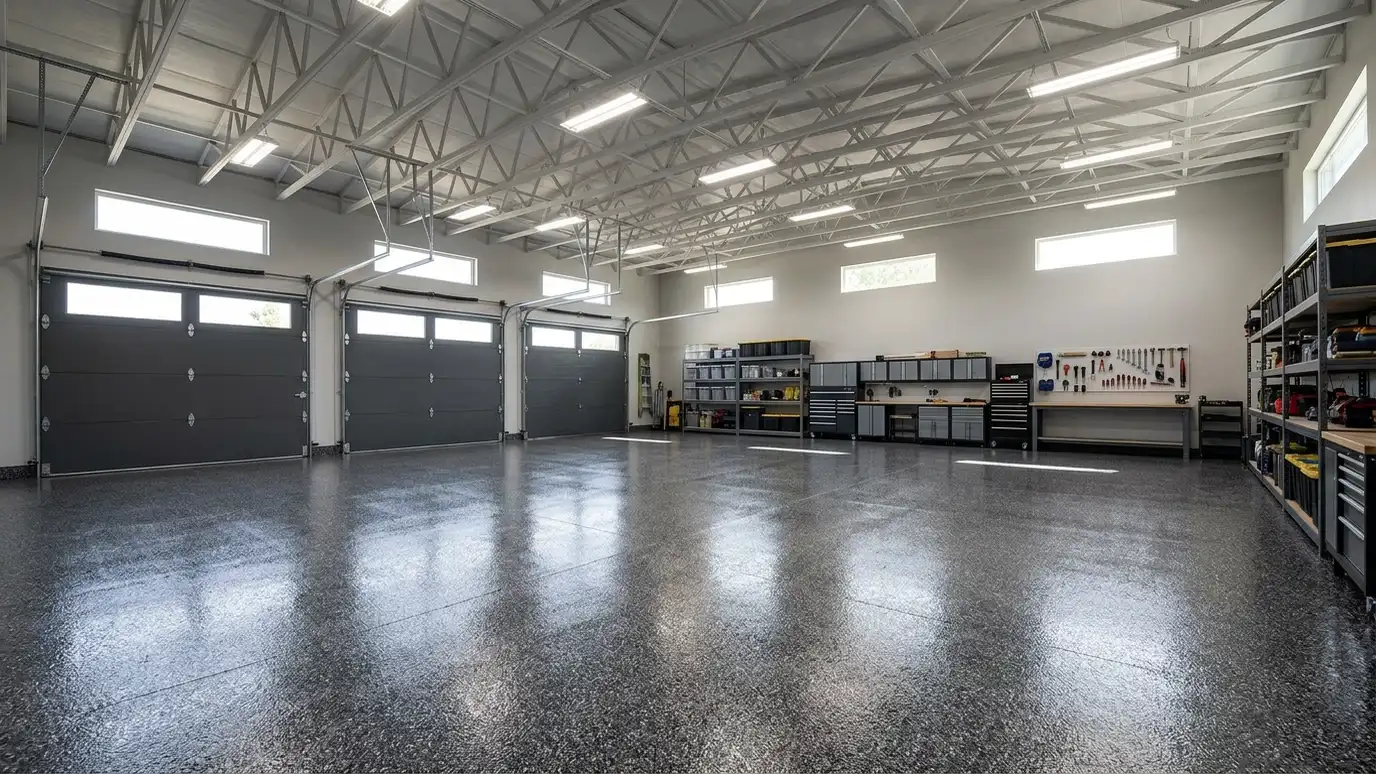 Three-Car and Oversized Garage Floor CoatingThree-car and oversized garage floor coating that handles larger slabs, multiple joints and long schedules with careful planning…Explore
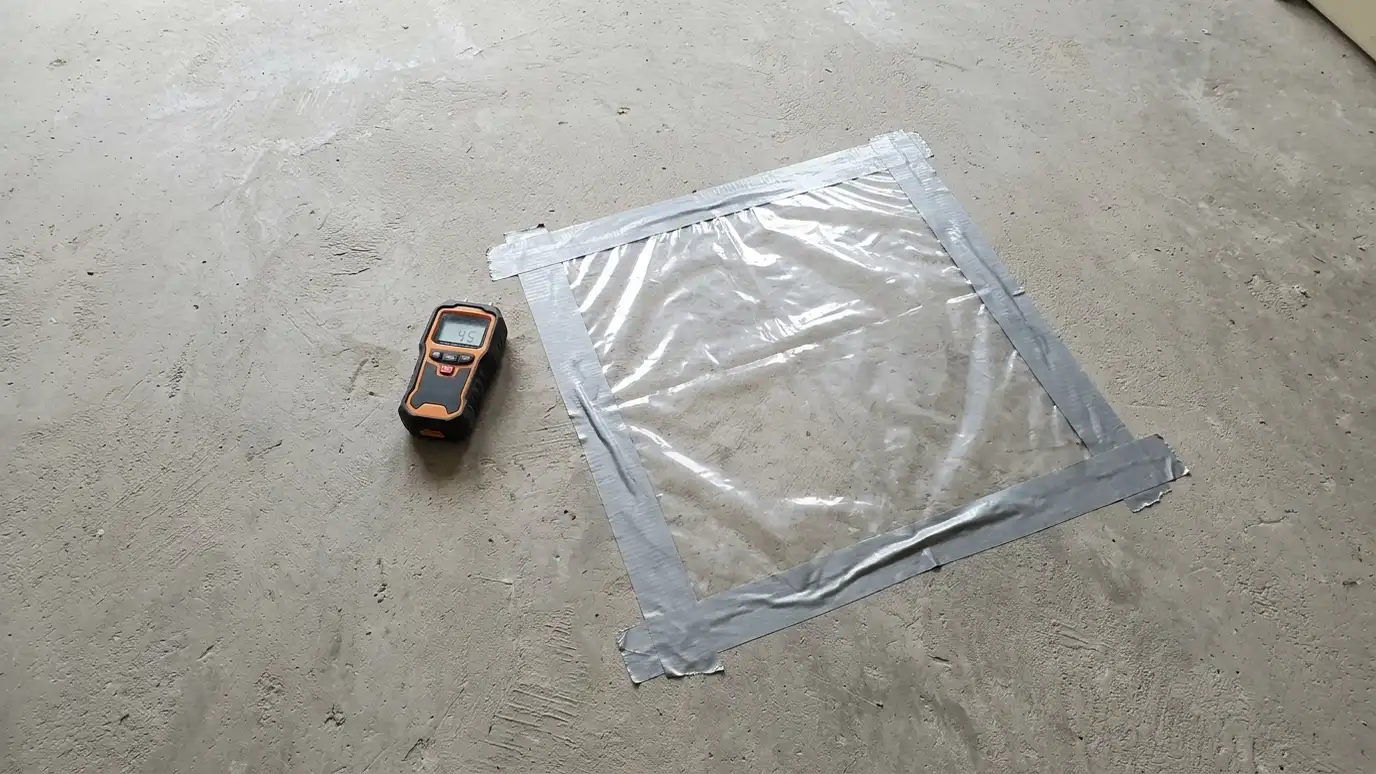 Concrete Moisture TestingConcrete moisture testing that checks for moisture vapor in the slab with plastic sheet, calcium chloride and in-slab…Explore
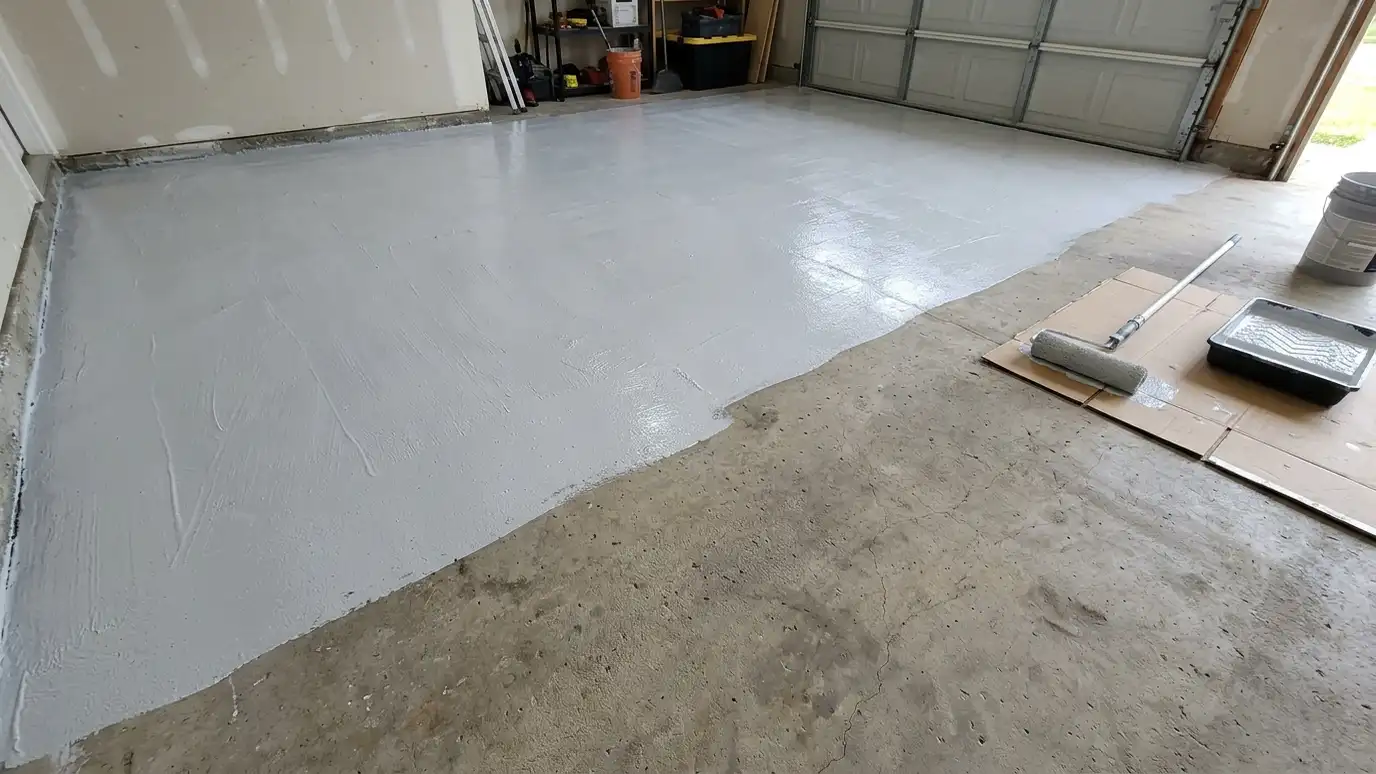 Moisture Vapor MitigationMoisture vapor mitigation that applies a moisture-blocking primer to concrete with elevated vapor emission so the coating system…Explore
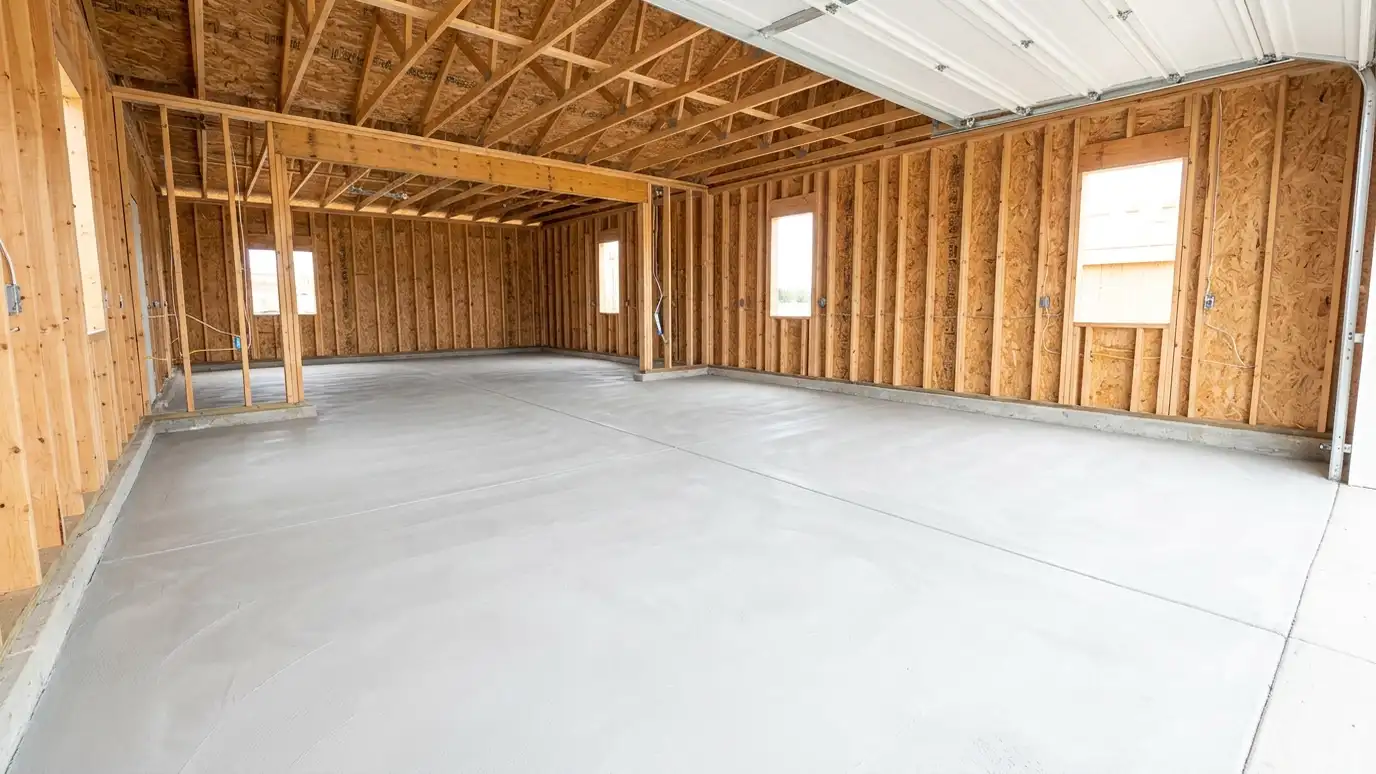 New Concrete Garage Floor CoatingNew concrete garage floor coating that waits for the slab to cure, tests moisture and preps the surface…Explore
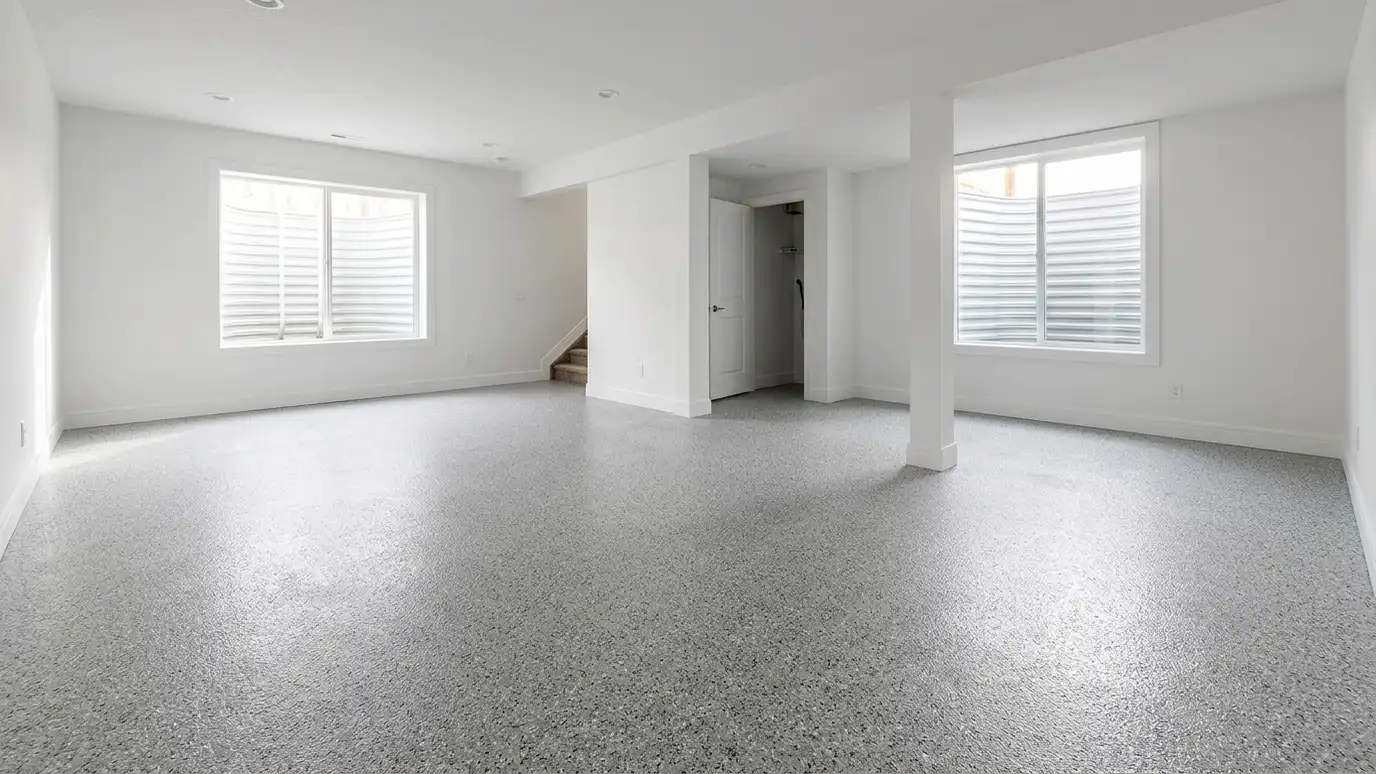 Basement Floor CoatingBasement floor coating that protects concrete with a seamless, easy-clean polyaspartic finish after moisture is tested and managed…Explore
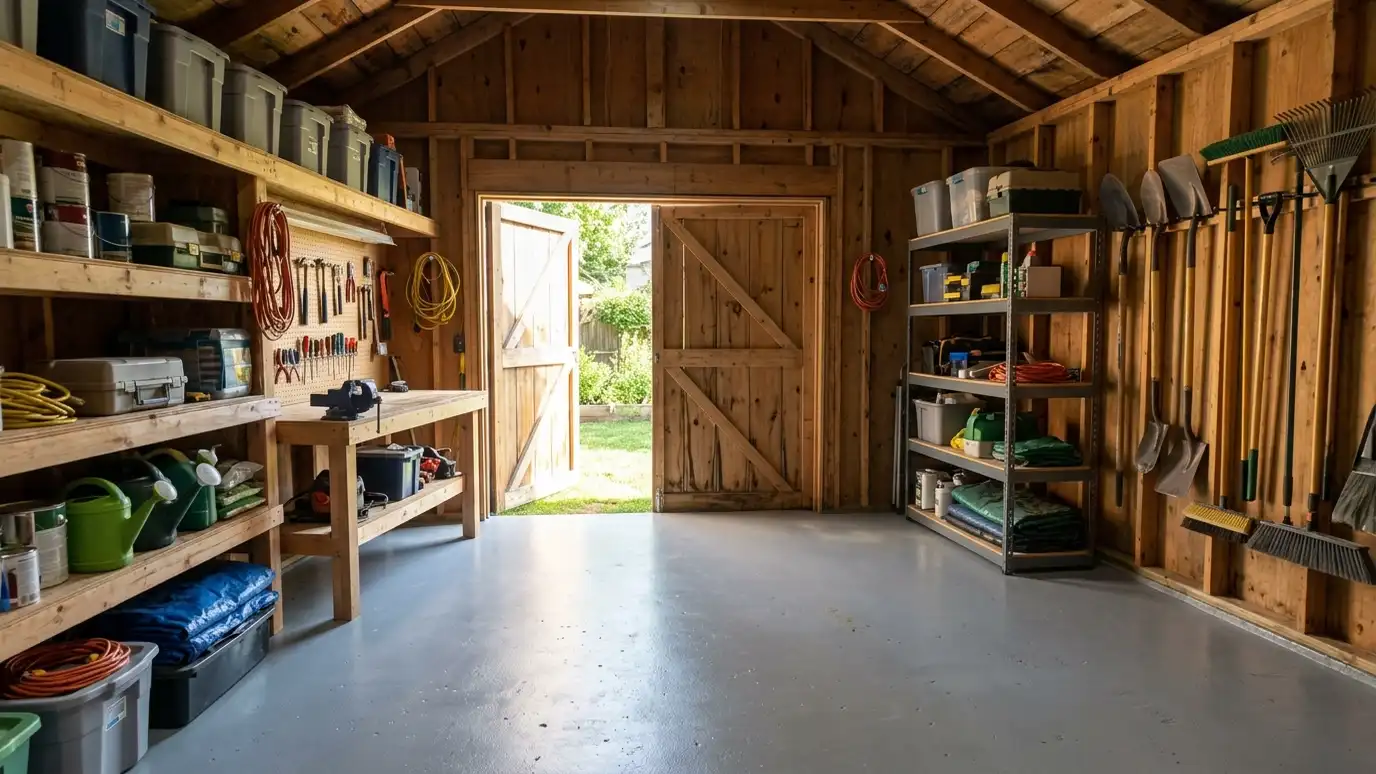 Shed and Barn Floor CoatingShed and barn floor coating that seals concrete in outbuildings, workshops and barns so tools, equipment and storage…Explore
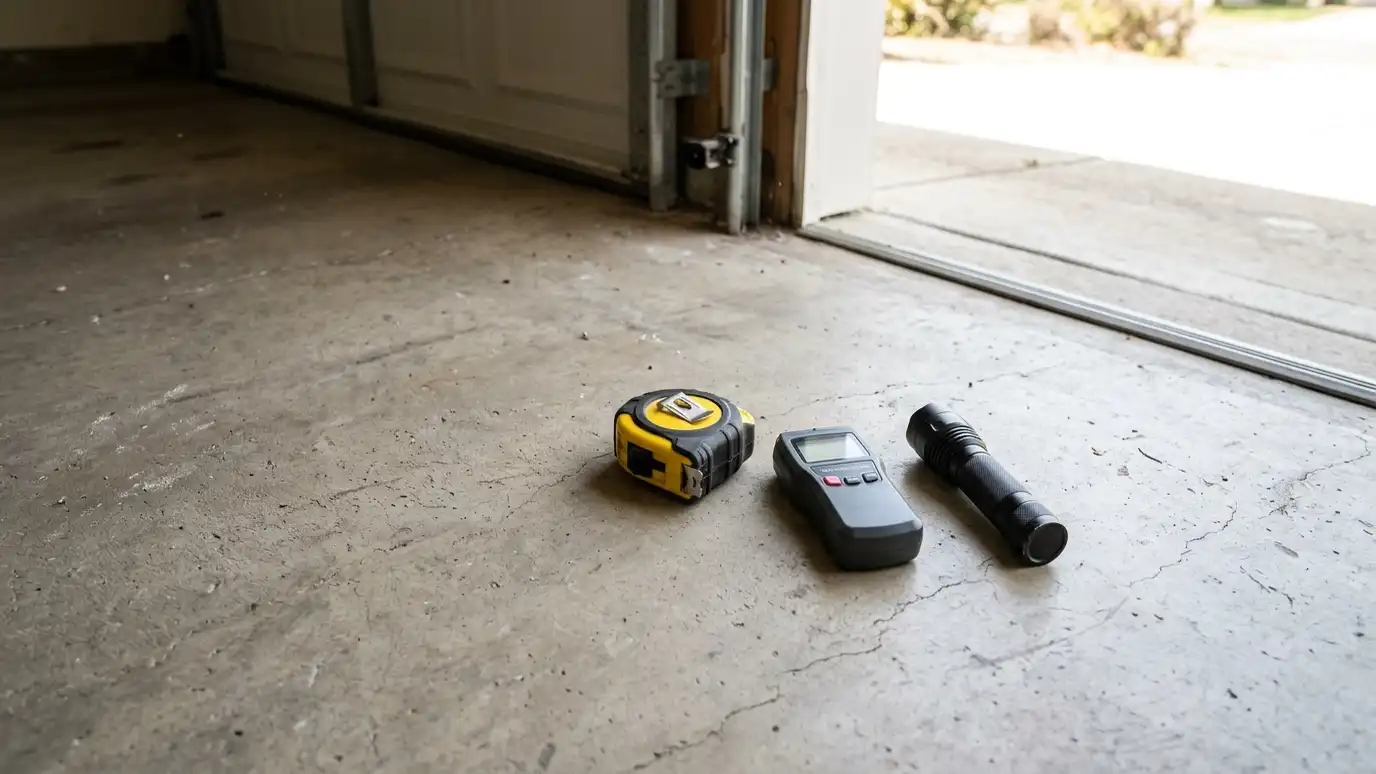 In-Home Measure and Site VisitIn-home measure and site visit that records floor size, slopes, drains, joints, doors and conditions so the coating…Explore
Design your floor, size a job or ballpark a budget.
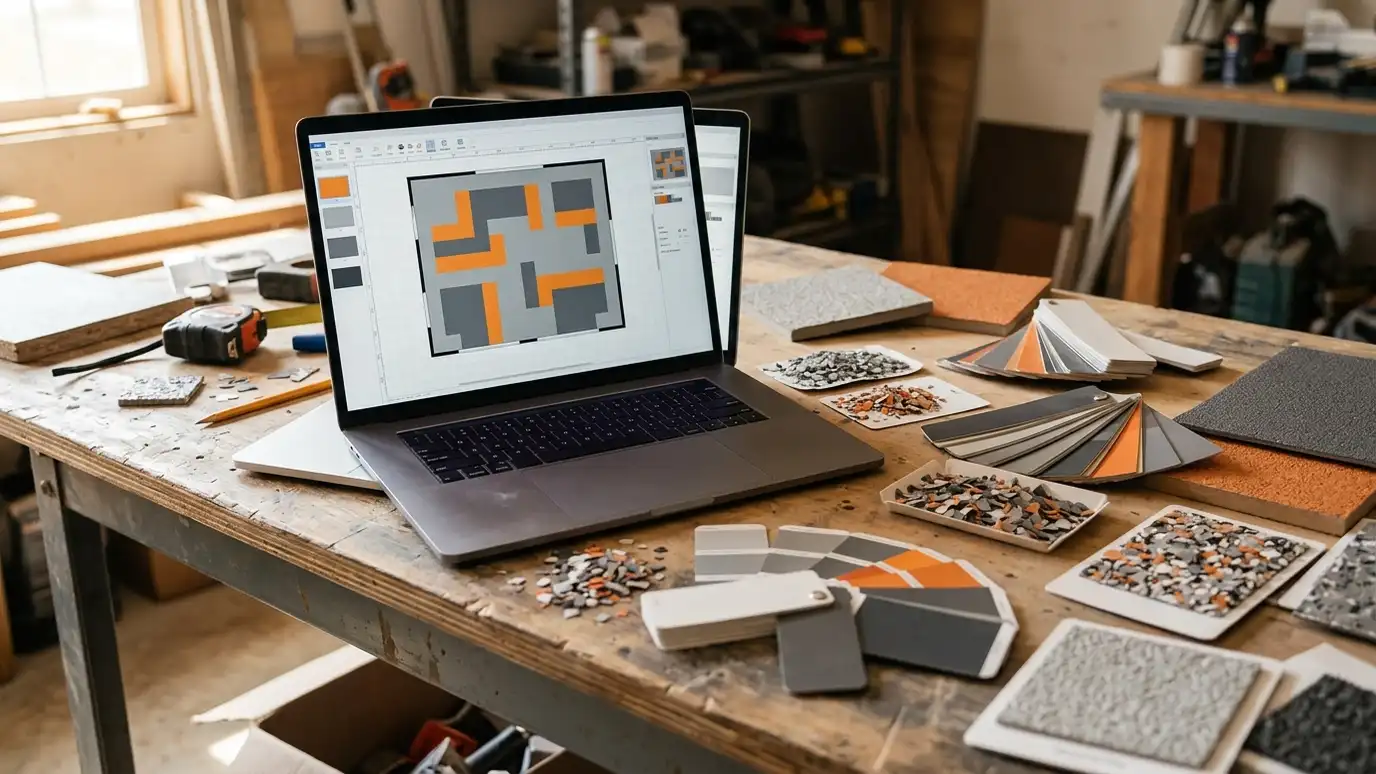 Garage Floor Design StudioDesign your floor on screen: pick the system, base color, flake blend, border, stripes, pattern, cove and sheen, see a live preview of your garage and send the design to us.Try it
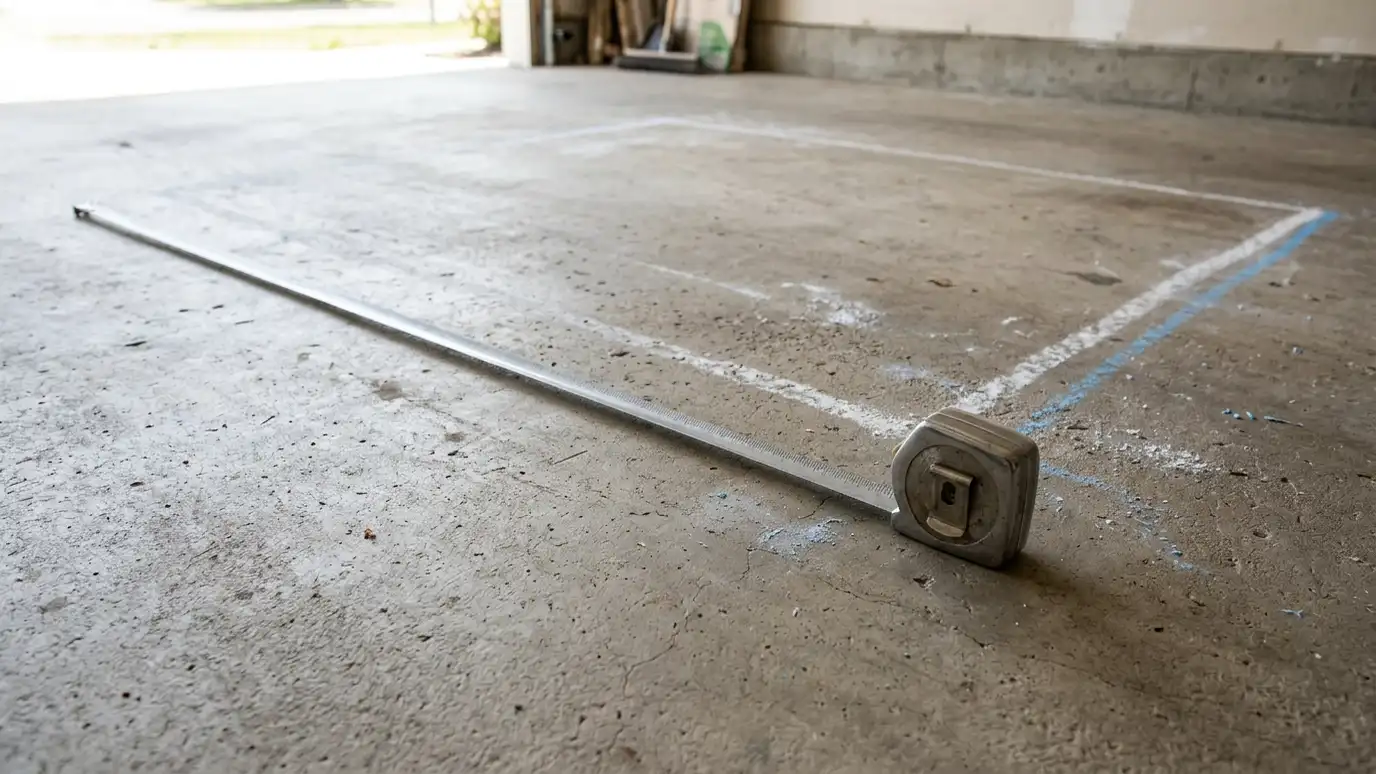 Garage Floor Coverage and Materials CalculatorEnter the floor size, extras and system to see planning amounts for basecoat, flake and topcoat, plus cove and border lengths.Try it
 Garage Floor Coating Budget PlannerPick a garage, basement, patio or commercial project, set the size and add allowances for repairs, texture, cove base and more to see a ballpark planning range. Placeholder values only.Try it
It can trap it, which causes failure, so we test first.
We can use a vapor primer or advise waiting, depending on the readings.
Not always, but it is a reason to look at drainage.
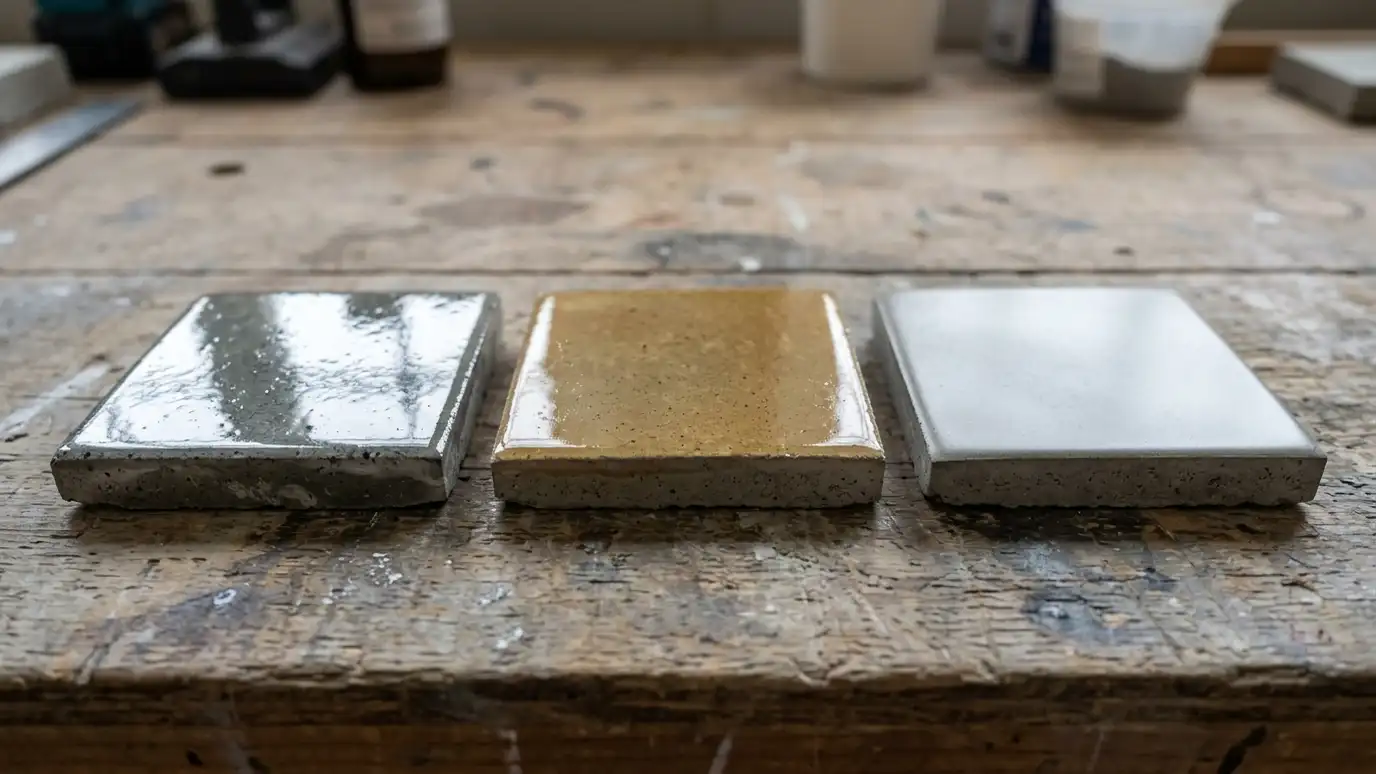 Comparison guidePolyaspartic vs Epoxy vs PolyureaHow the three coating families differ in cure speed, sun stability, thickness, odor, flexibility and the work they…Learn more
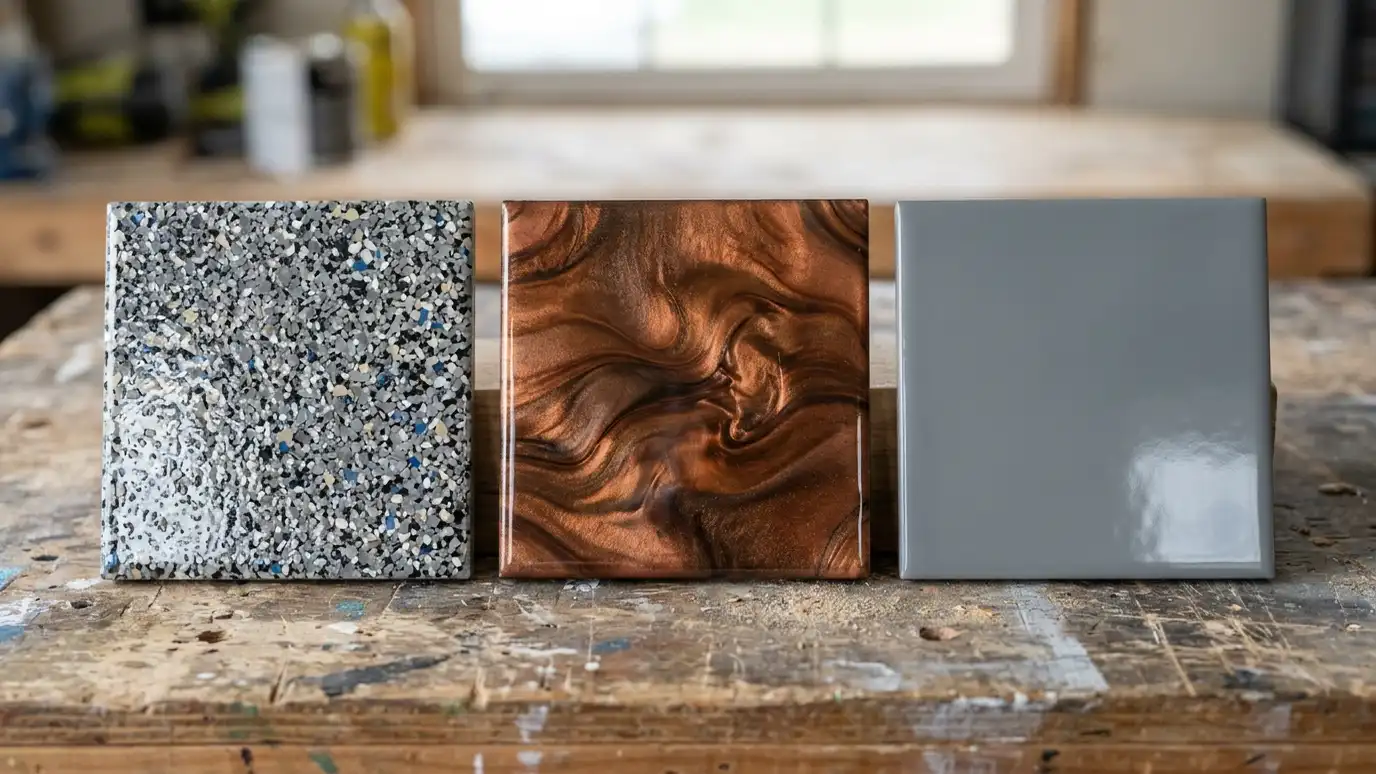 Comparison guideFlake vs Metallic vs SolidHow full flake, partial flake, metallic and solid color floors differ in look, wear hiding, texture and upkeep.Learn more
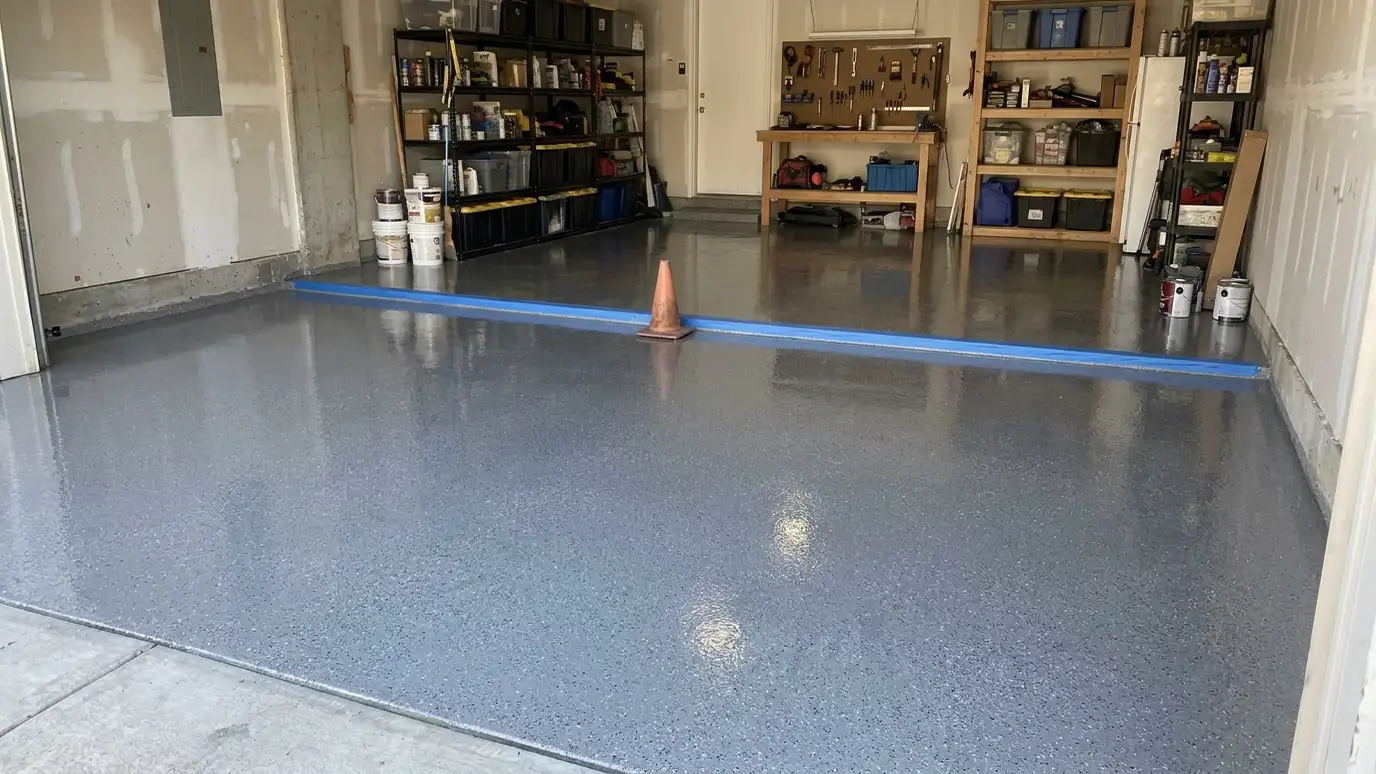 Comparison guideCure Time and TimelineHow prep, coating, flake, topcoat and cure steps fit into a schedule, and when you can walk, move…Learn more
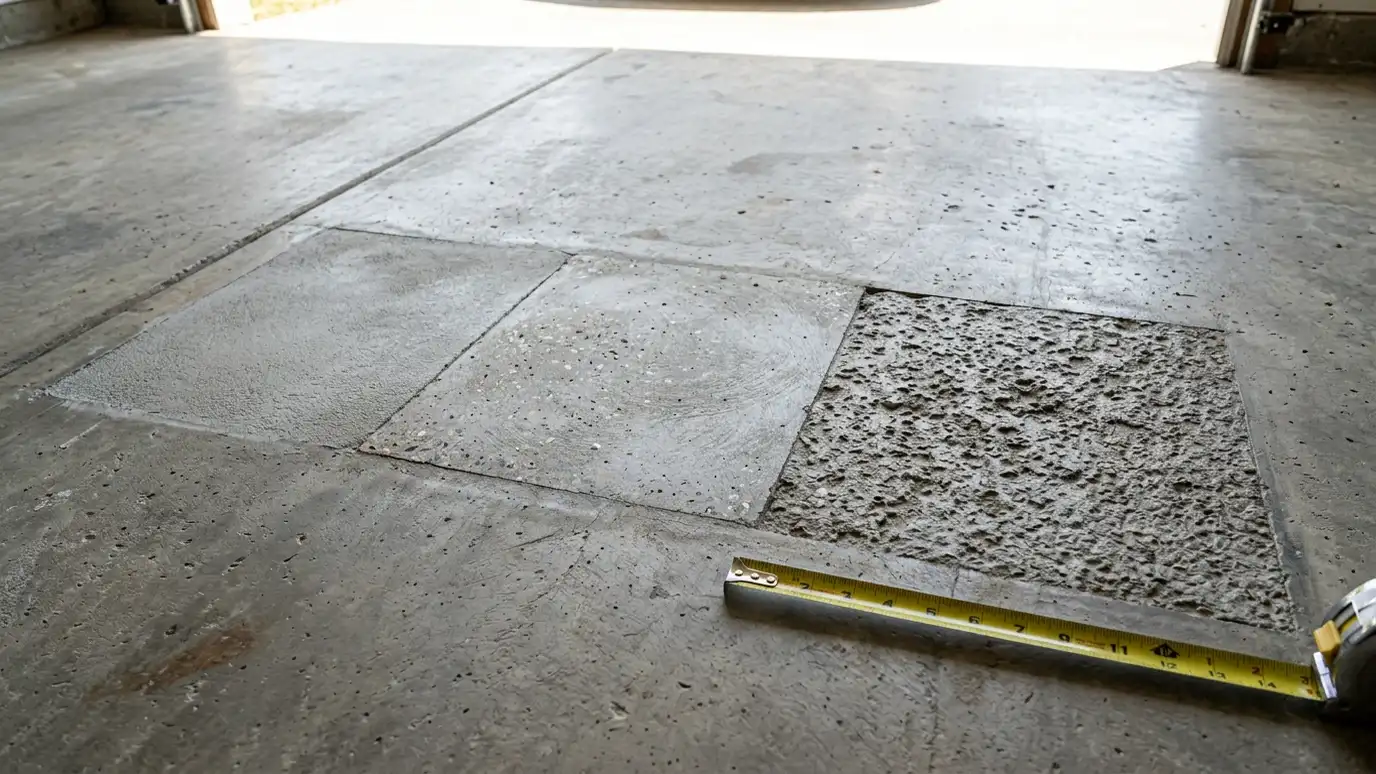 Comparison guidePrep Methods ComparedHow diamond grinding, shot blasting and acid etching compare in profile, dust, speed and results.Learn more
Call us and describe your floor. We will visit, check the slab and give you a clear written plan.