Quartz and granite polyaspartic floors that broadcast colored sand into the basecoat for a hard, textured, stone-like surface with excellent traction and durability.
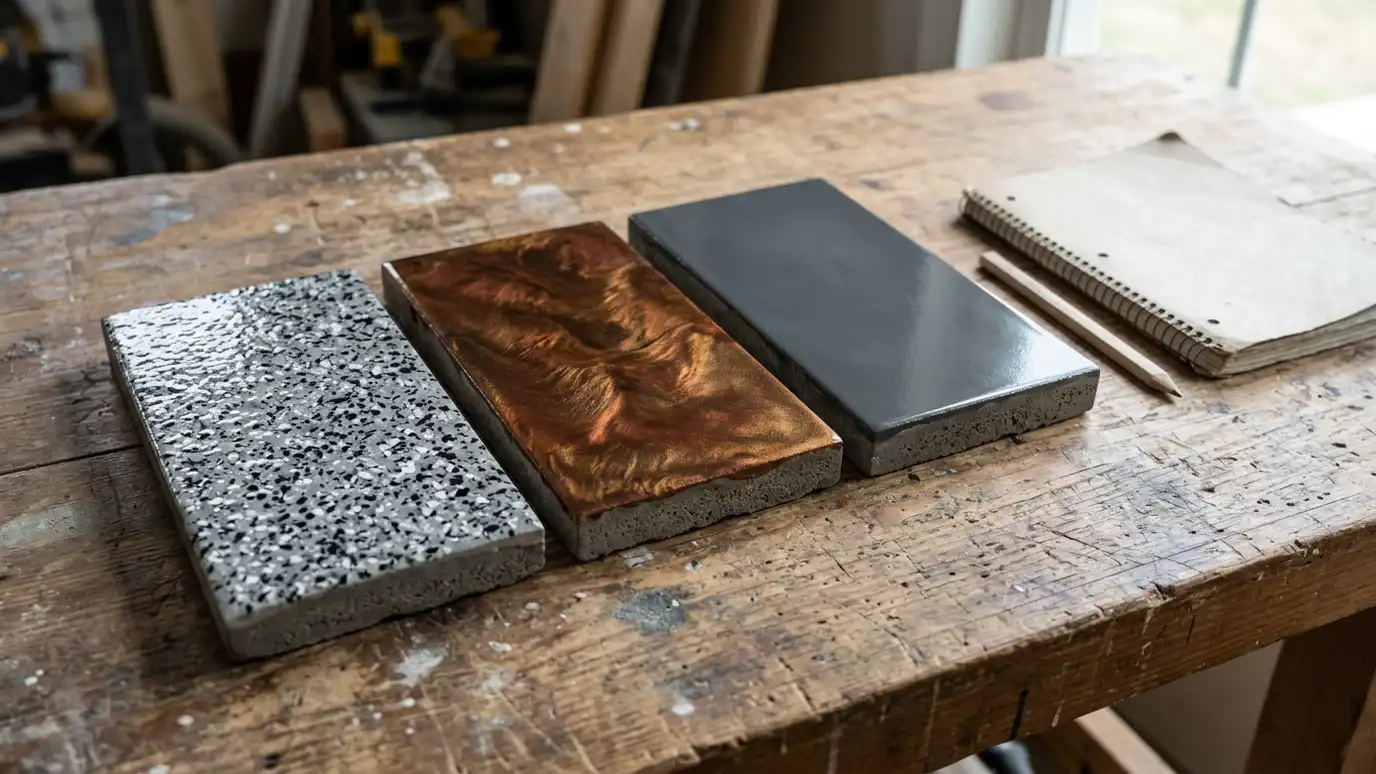
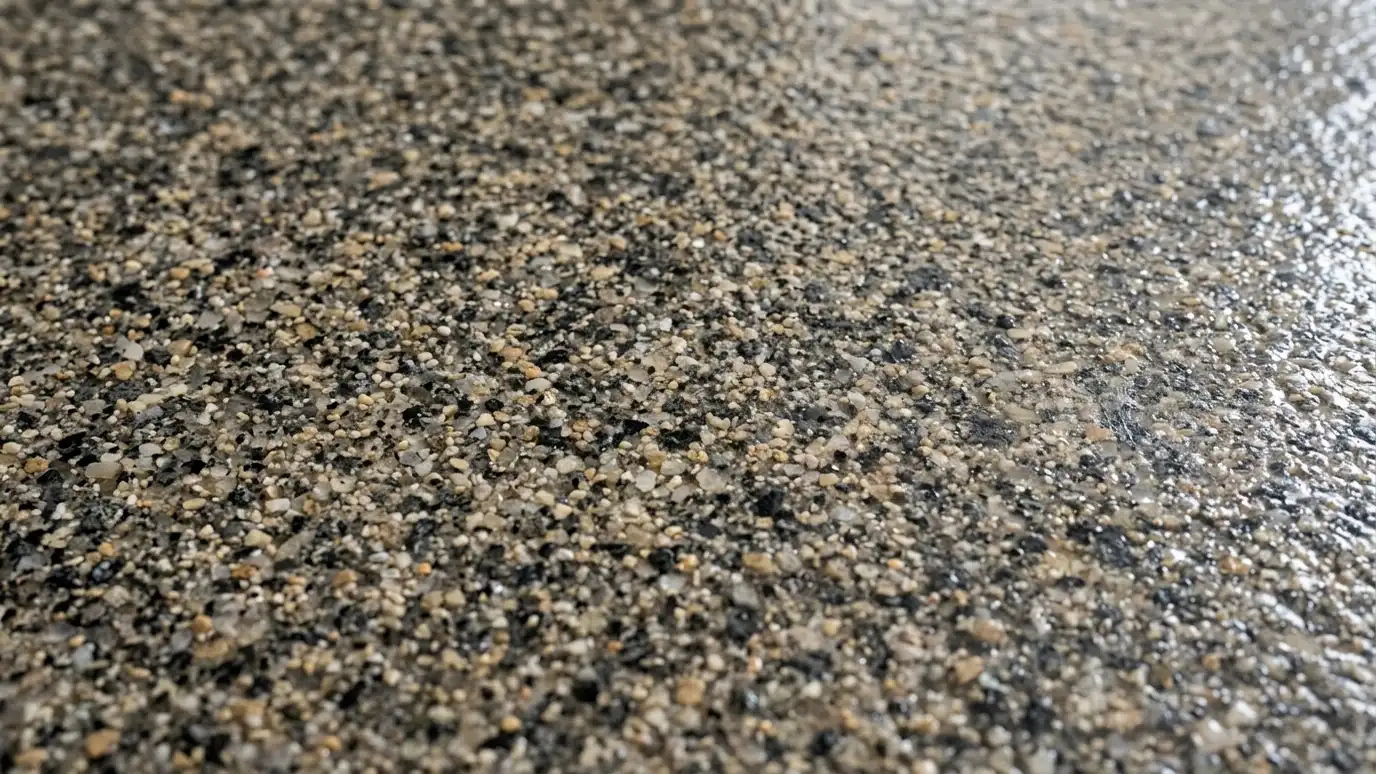
A quartz or granite floor is built a little differently from a flake floor. Instead of paper-thin flakes, colored quartz or granite aggregate is broadcast into the basecoat to form a dense, gritty, stone-like layer, then sealed with clear topcoats. The surface is tougher and more textured than a flake floor, with excellent traction and a refined, earthy look. Because it resists wear so well, it appeals to workshops, busy family garages and spaces in Nashville that see heavy foot traffic or wet shoes.
We start with grinding and repairs, then apply a basecoat and broadcast the aggregate to full coverage. Excess material is removed after the coat sets, and clear topcoats are rolled on in as many layers as it takes to fill and smooth the texture. The finished floor feels a little like fine stone and is slow to show scratches. We explain how texture affects cleaning, since a gritty surface needs a good deck brush, and we offer a smoother finish if you prefer a softer feel under bare feet.
Colored aggregate forms a hard, gritty layer.
Texture helps with traction in wet shoes and busy shops.
Scratches blend into the texture.
We show you how to clean a textured floor.
Colored quartz or granite forms a hard, stone-like surface.
The natural texture grips well, even with wet shoes.
Scratches blend into the texture.
Clear coats fill and smooth the surface.
Granite and quartz blends suit modern and traditional spaces.
We show you how to care for a textured floor.
Every topic has its own page with what to expect and how we approach it.
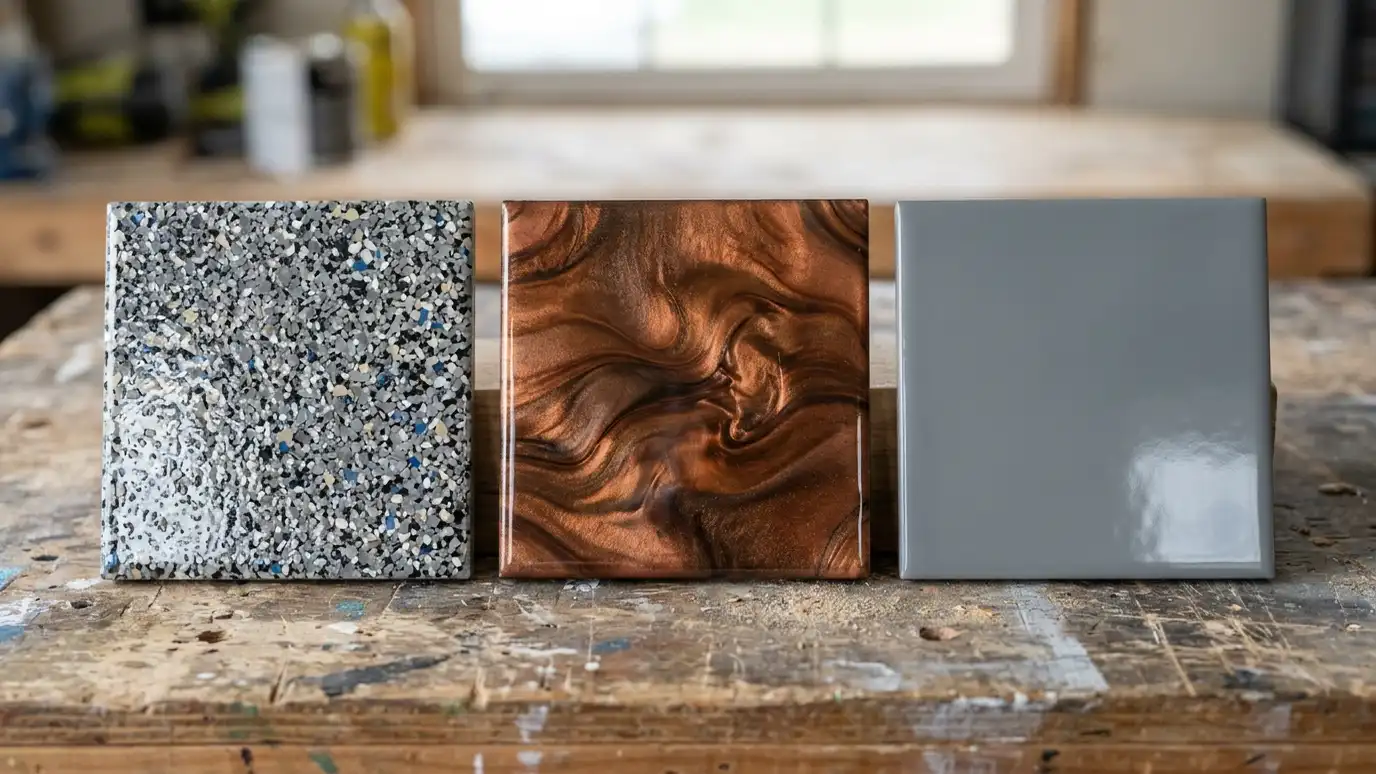 Comparison guideFlake vs Metallic vs SolidHow full flake, partial flake, metallic and solid color floors differ in look, wear hiding, texture and upkeep.Learn more
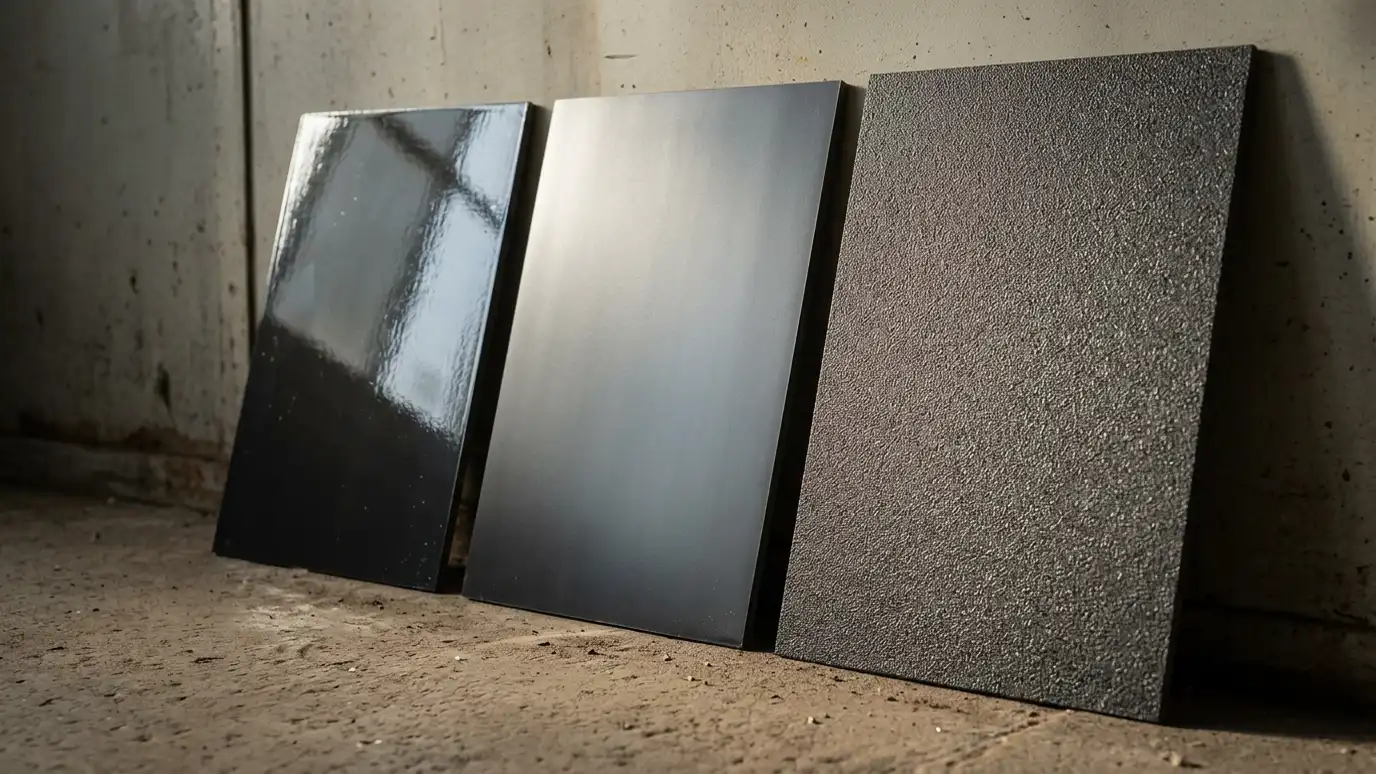 Comparison guideFinish and Slip ResistanceHow gloss, satin, matte and textured finishes differ in traction, cleaning, scuff hiding and look.Learn more
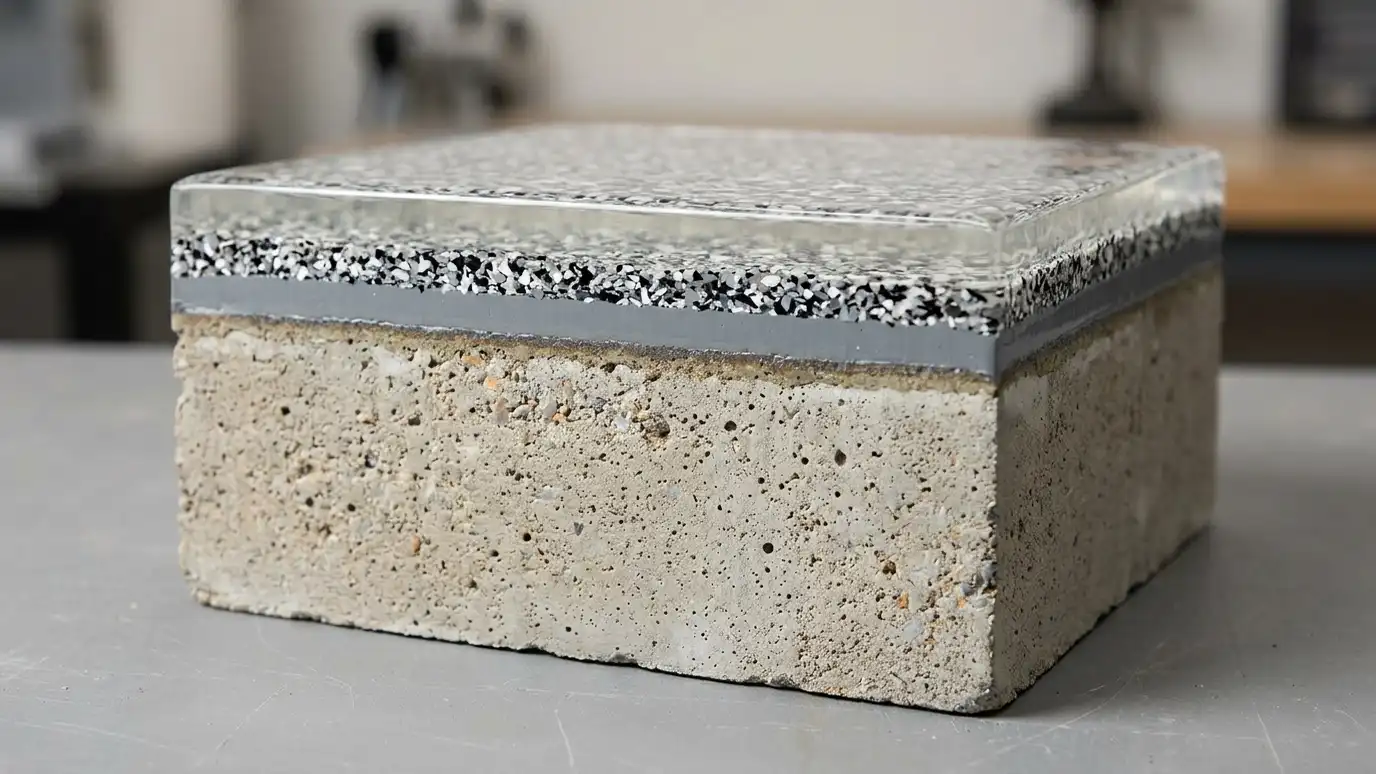 Comparison guideLayers and ThicknessHow primer, basecoat, flake and topcoat layers add up to a floor system, and why thickness and layer…Learn more
Answer a few questions about how you use the floor, the look you like and the care you want to see which coating style usually fits.
You tell us what you want to coat, how you use the space and what bothers you about the floor, and we set a visit.
We measure the floor, check cracks, stains and moisture, take photos and talk through colors and finishes.
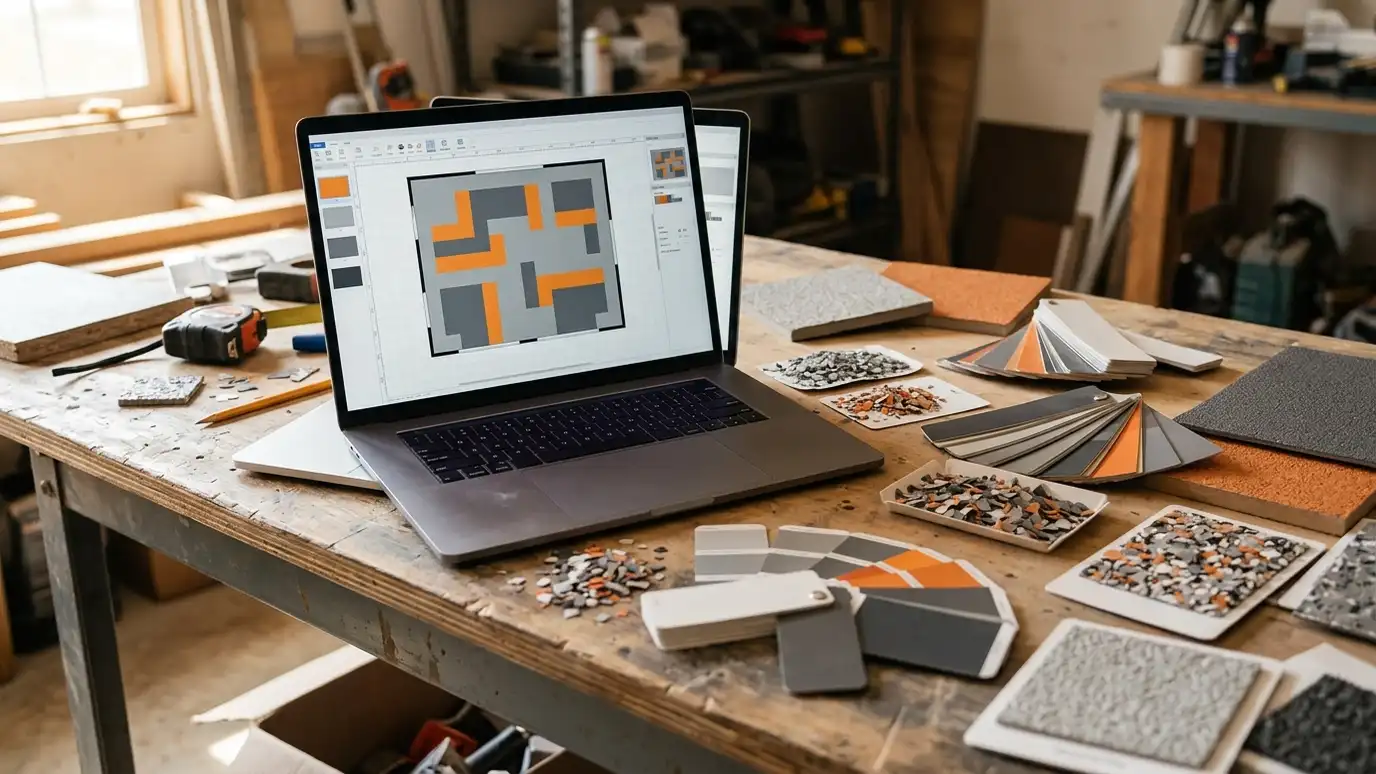
You review samples, a design preview and a plain written scope with every layer and the schedule before anything is ordered.
We clear and protect the space, diamond grind the slab, repair cracks and joints and clean the surface.
We apply the basecoat, broadcast flakes or color and roll the clear topcoat, then give you a cure schedule.
We walk the finished floor with you, share a care guide and schedule a first checkup.
Flakes are thin and decorative. Quartz and granite are aggregate, which is thicker and more textured.
It feels like fine stone. Extra topcoats can soften the texture.
It needs a stiffer brush and regular mopping, but it hides dirt well.
Yes. The tough surface and traction suit shops and busy garages.
Yes. Many blends of quartz and granite are available.
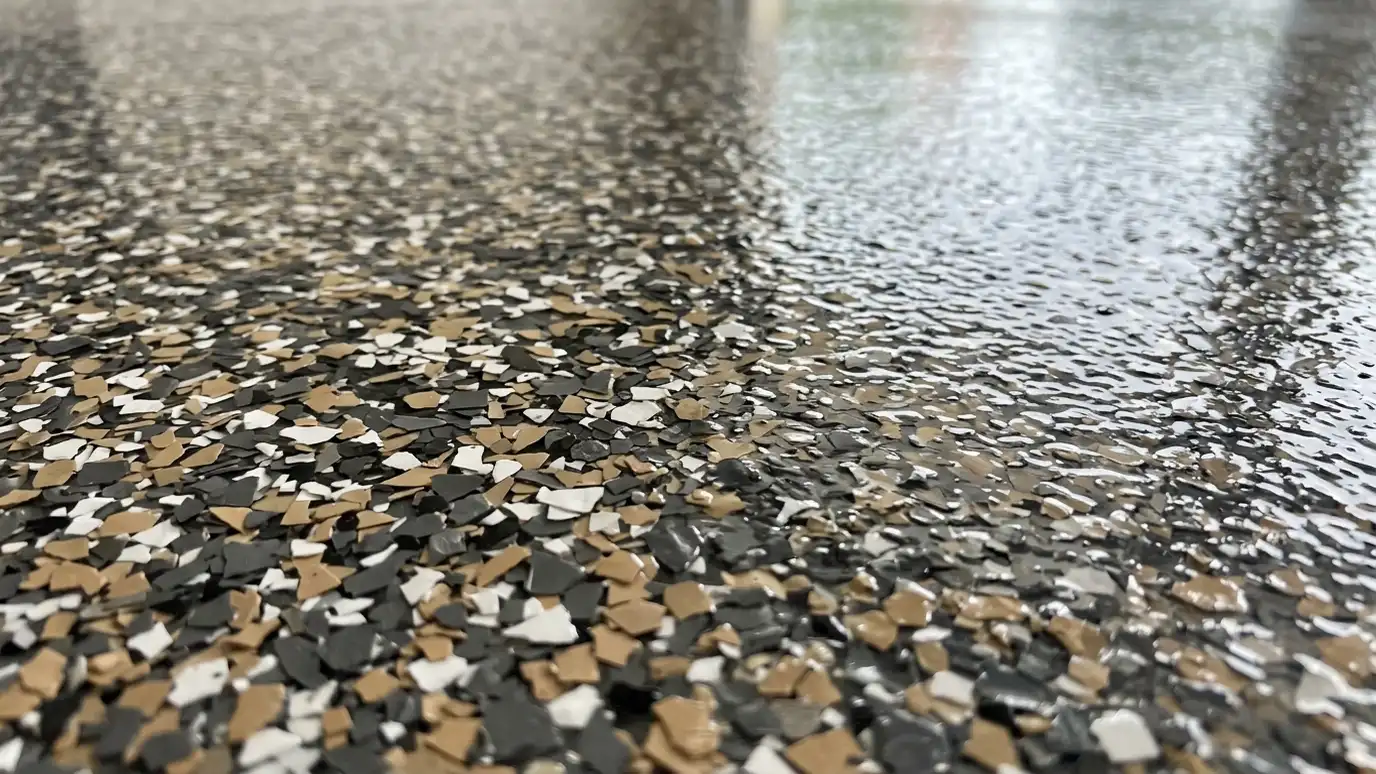 Full-Flake Polyaspartic Garage FloorsFull-flake polyaspartic garage floors with a dense broadcast of decorative color flakes sealed under clear topcoats for a…Explore
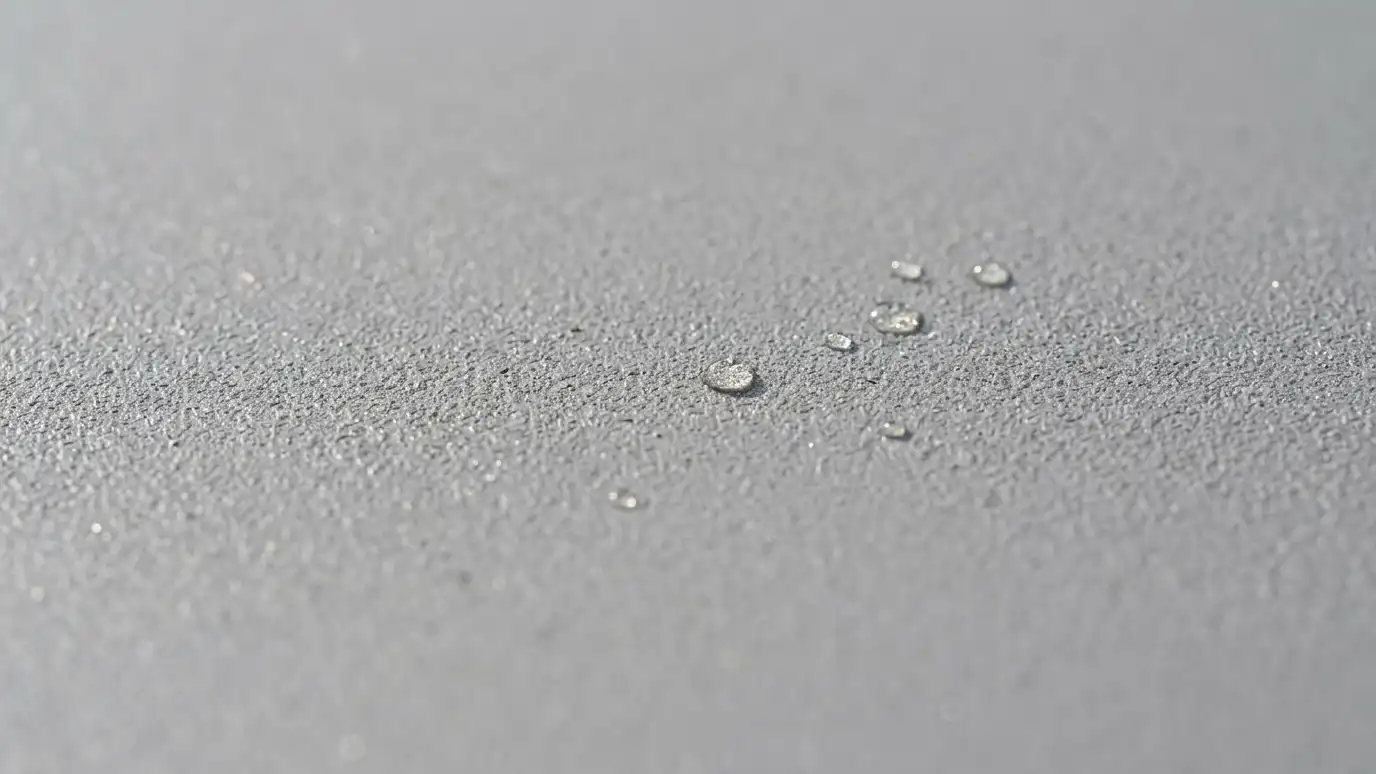 Anti-Slip Garage Floor FinishesAnti-slip garage floor finishes that add fine grit, aggregate or textured topcoats for better traction in wet, snowy…Explore
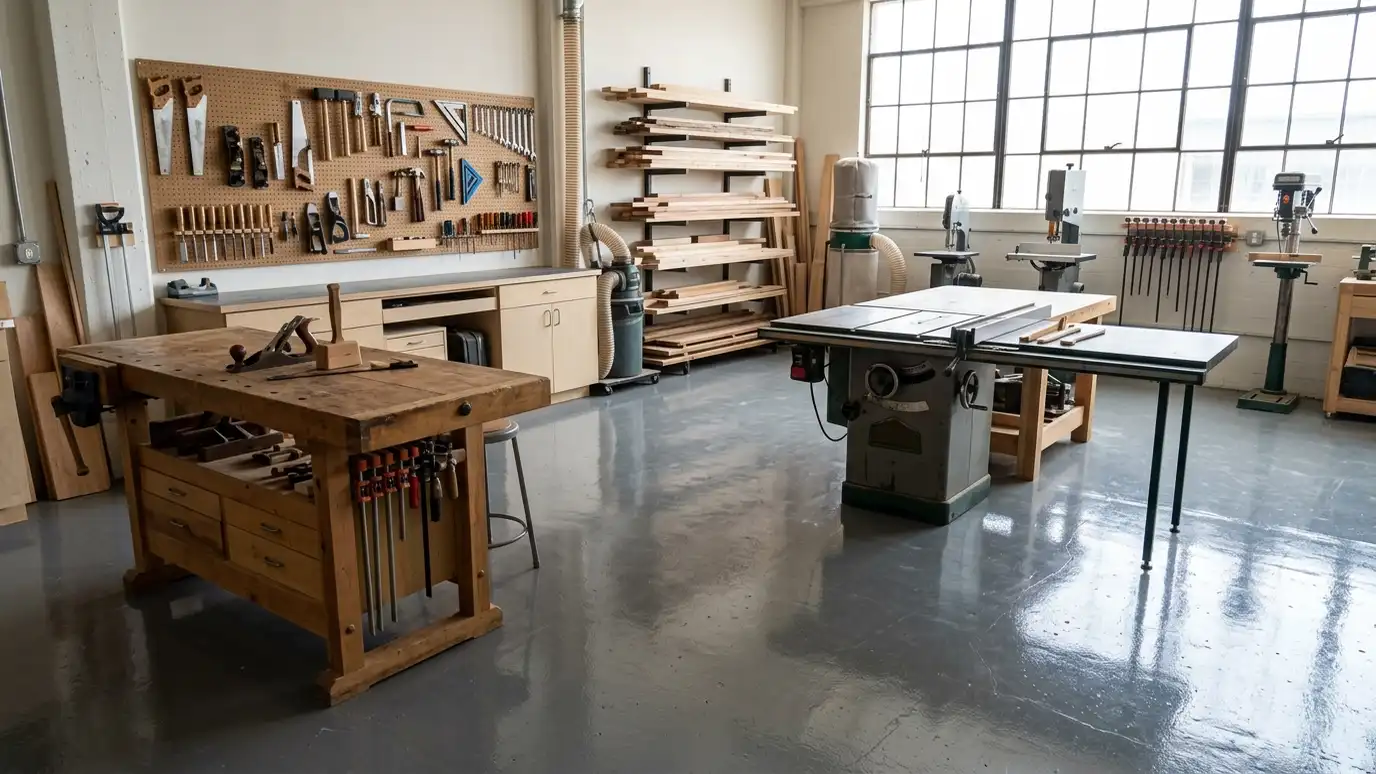 Workshop and Hobby Room FloorsWorkshop and hobby room floors coated for tools, sawdust, spills and long hours standing, with light-reflecting color, grip…Explore
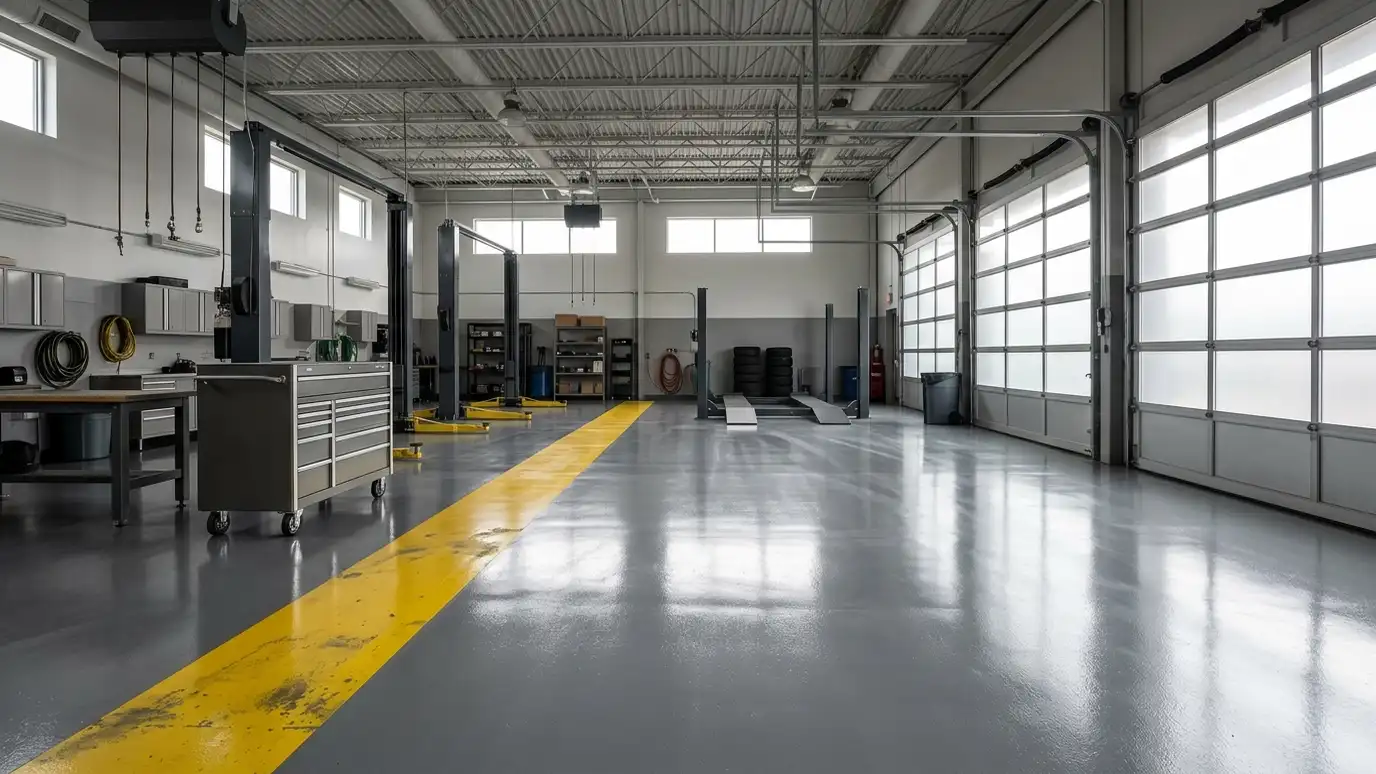 Commercial Garage Floor CoatingCommercial garage floor coating for service bays, fleet garages and business garages, with tough polyaspartic systems planned around…Explore
Tell us about your floor and we will call you back to set up a visit.
Or call (615) 357-7797 to talk now.