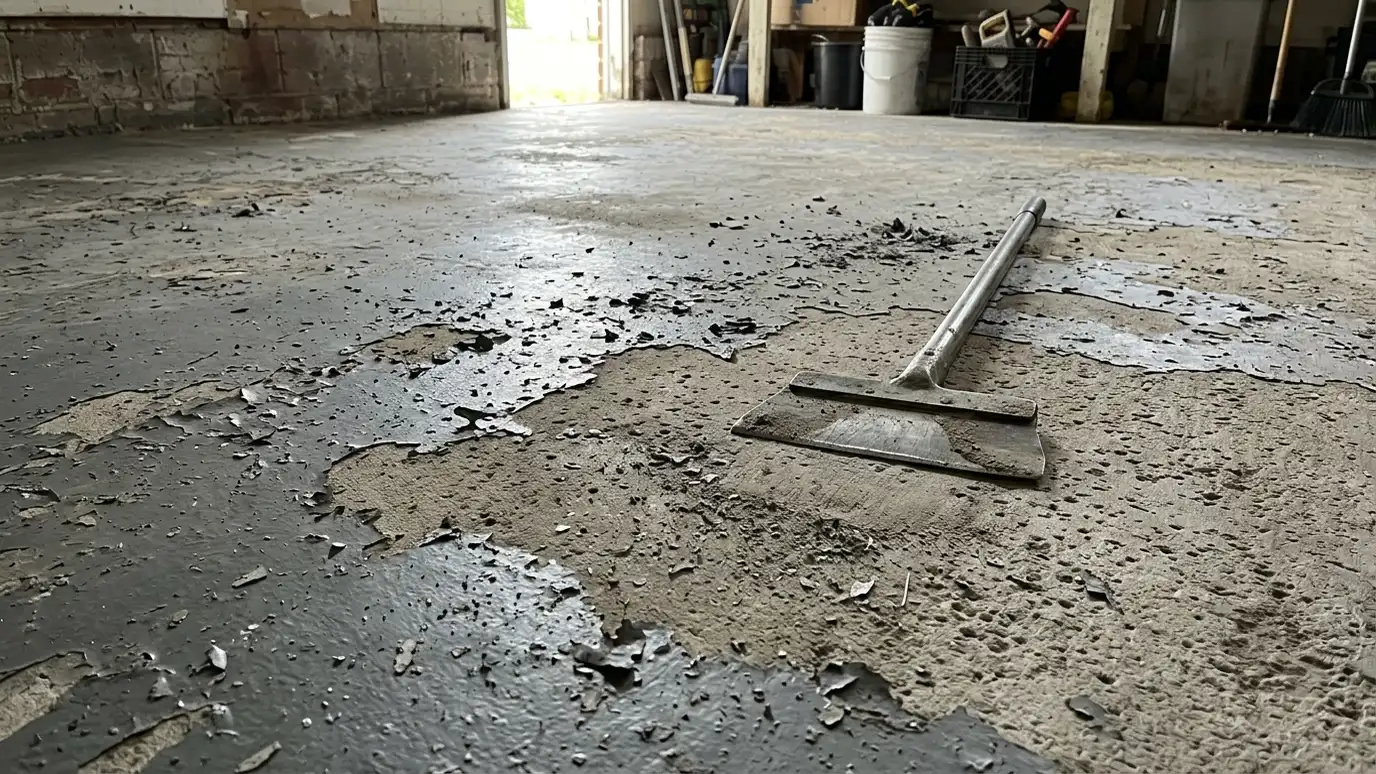
Old epoxy and paint removal that grinds or scrapes away peeling garage floor coatings, sealers and paint so a new system has sound concrete to bond to.
A new coating is only as good as what it sits on. If an old epoxy, paint or sealer is peeling, chalking or sticky, the new system will fail along with it. Removing the old layer is hard, dusty work, but it is the step that makes the new floor last. Many Nashville garages have a past do-it-yourself coating that began to lift after the first hot tires or a wet winter, and removing it is the starting point for a lasting fix.
We test the existing coating by scraping and by checking its bond to the slab. If it is loose, we remove it with diamond grinding, shot blasting or scraping, choosing the method by thickness and type. Thick epoxy or urethane coatings take more effort than thin paints, and we give an honest estimate of the time. Once the slab is bare, we repair cracks and spalls, check moisture and prepare the concrete for the new coating. We also explain why it is better to remove a failing coating than to try to cover it, however tempting that seems.
We check whether the old coating is holding.
Grinding, blasting or scraping by coating type.
Cracks and damage are fixed once the concrete is exposed.
Hidden moisture is a common cause of failure.
We check whether the old coating is holding.
Grinding, blasting or scraping depending on the coating.
Thick coatings take longer, and we say so.
Cracks and damage are fixed once the concrete is exposed.
Hidden moisture is a common reason coatings fail.
The slab is prepared for the new coating.
Every topic has its own page with what to expect and how we approach it.
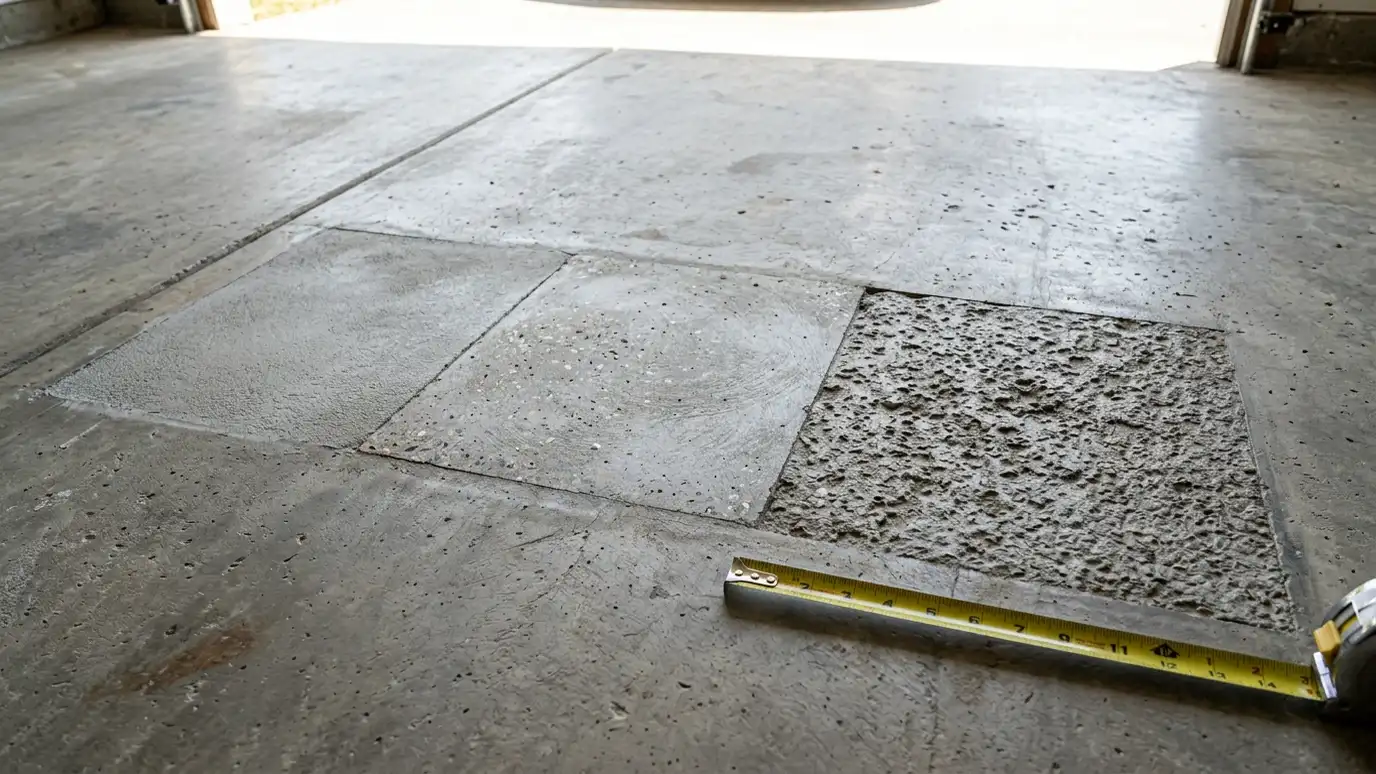 Comparison guidePrep Methods ComparedHow diamond grinding, shot blasting and acid etching compare in profile, dust, speed and results.Learn more
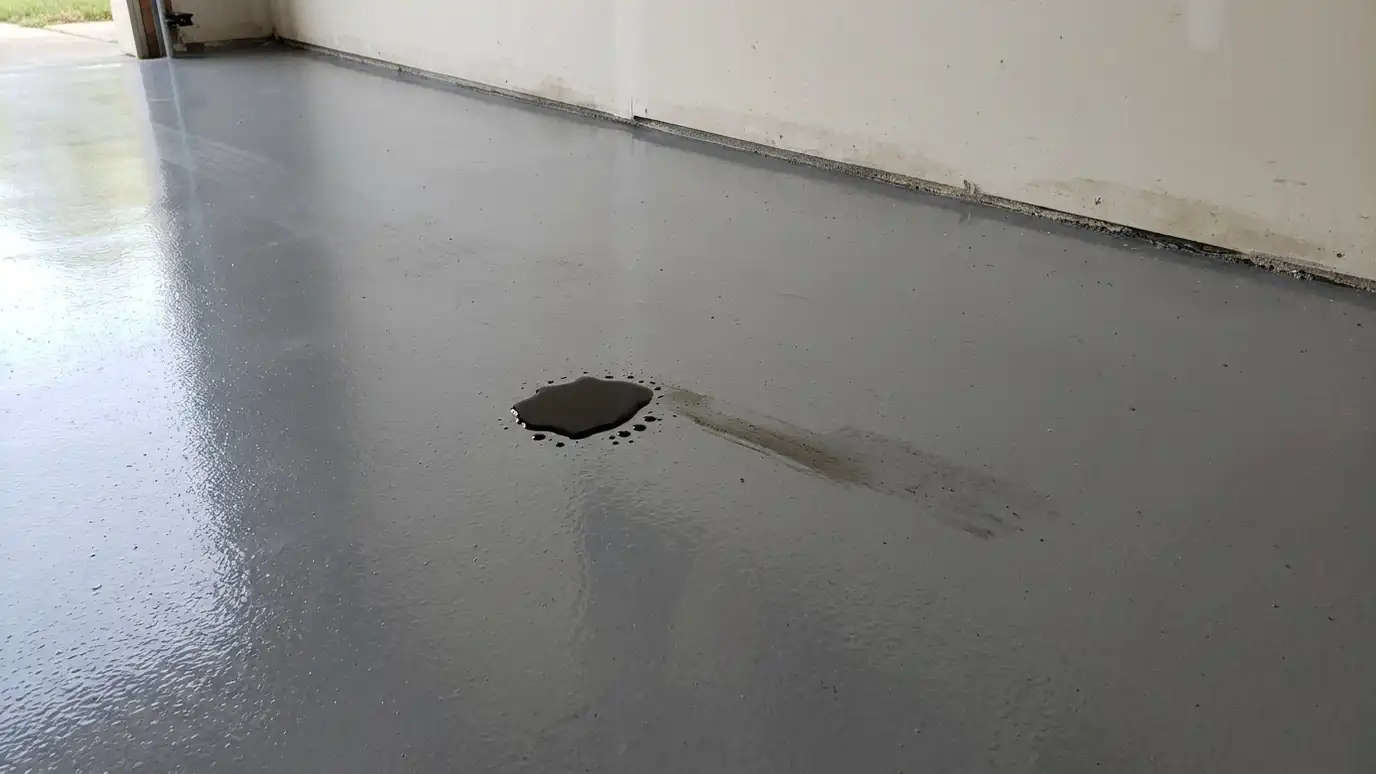 Comparison guideHot Tires and Stain ResistanceHow coatings handle warm tires, oil, brake fluid, salt and cleaners, and what to do after a spill.Learn more
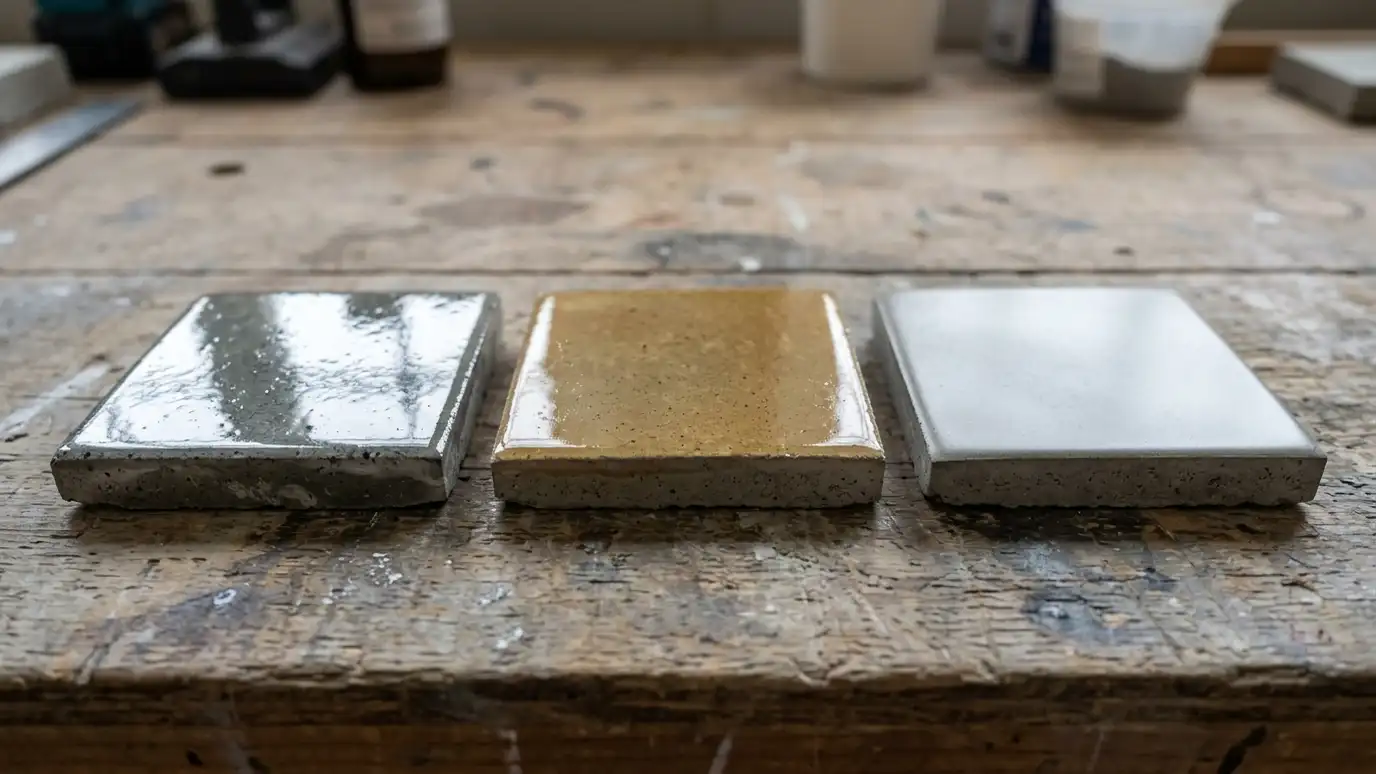 Comparison guidePolyaspartic vs Epoxy vs PolyureaHow the three coating families differ in cure speed, sun stability, thickness, odor, flexibility and the work they…Learn more
Tick what you notice about your slab, from cracks and stains to moisture and old coatings, to see what to check and fix before a consultation.
You tell us what you want to coat, how you use the space and what bothers you about the floor, and we set a visit.
We measure the floor, check cracks, stains and moisture, take photos and talk through colors and finishes.
You review samples, a design preview and a plain written scope with every layer and the schedule before anything is ordered.
We clear and protect the space, diamond grind the slab, repair cracks and joints and clean the surface.
We apply the basecoat, broadcast flakes or color and roll the clear topcoat, then give you a cure schedule.
We walk the finished floor with you, share a care guide and schedule a first checkup.
Only if it is sound. Peeling or chalky paint must be removed.
It makes dust, so we use shrouds, vacuums and masking.
It depends on the coating thickness. We give an estimate after a test.
Common causes are poor prep, moisture and hot tires. We look for the cause before recoating.
Not always. Sound coatings can sometimes be scuffed and recoated.
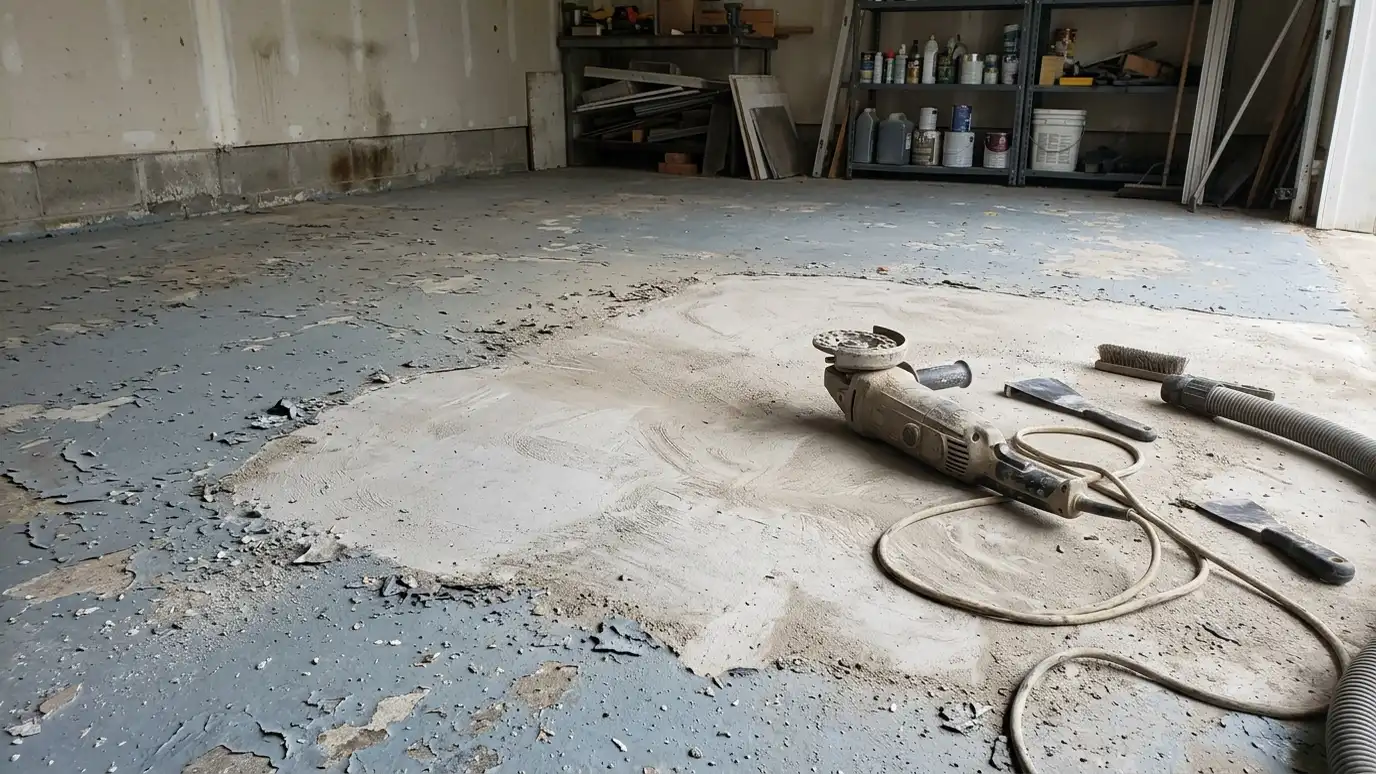 Epoxy-to-Polyaspartic RecoatEpoxy-to-polyaspartic recoat service that removes failing coatings or scuffs sound ones, then renews the floor with a UV-stable…Explore
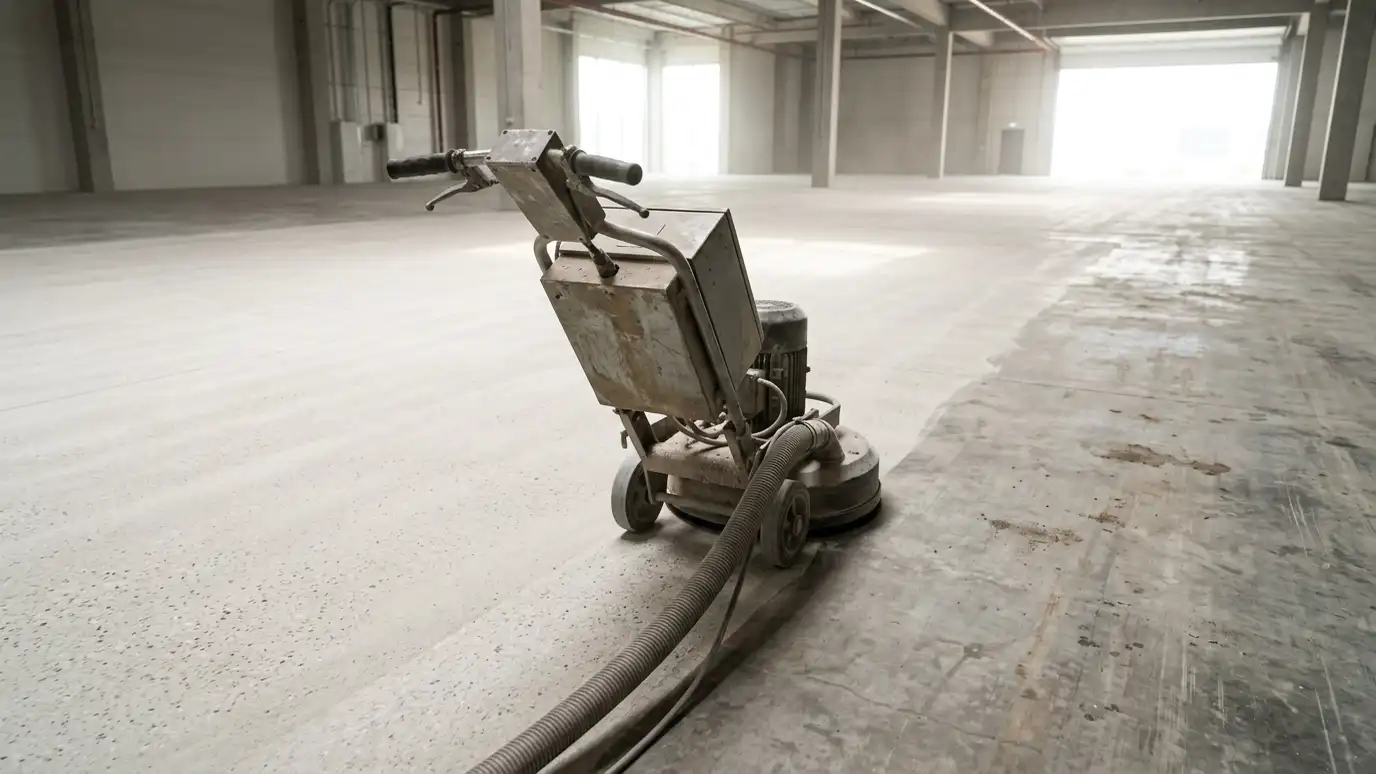 Diamond Grinding and Surface PrepDiamond grinding and surface prep that opens concrete, removes laitance and old coatings and gives a polyaspartic system…Explore
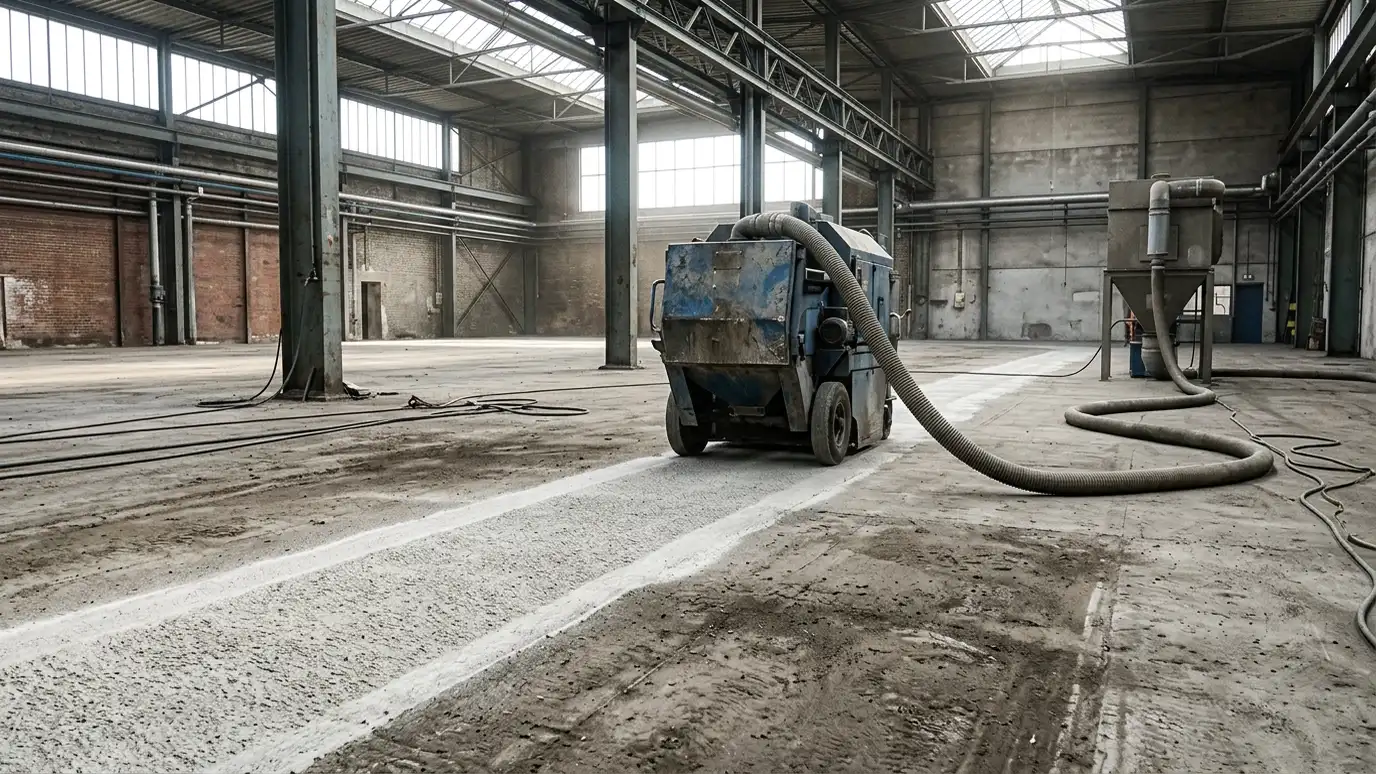 Shot Blasting Concrete PrepShot blasting concrete prep that uses steel shot to clean and profile large or heavily coated slabs quickly…Explore
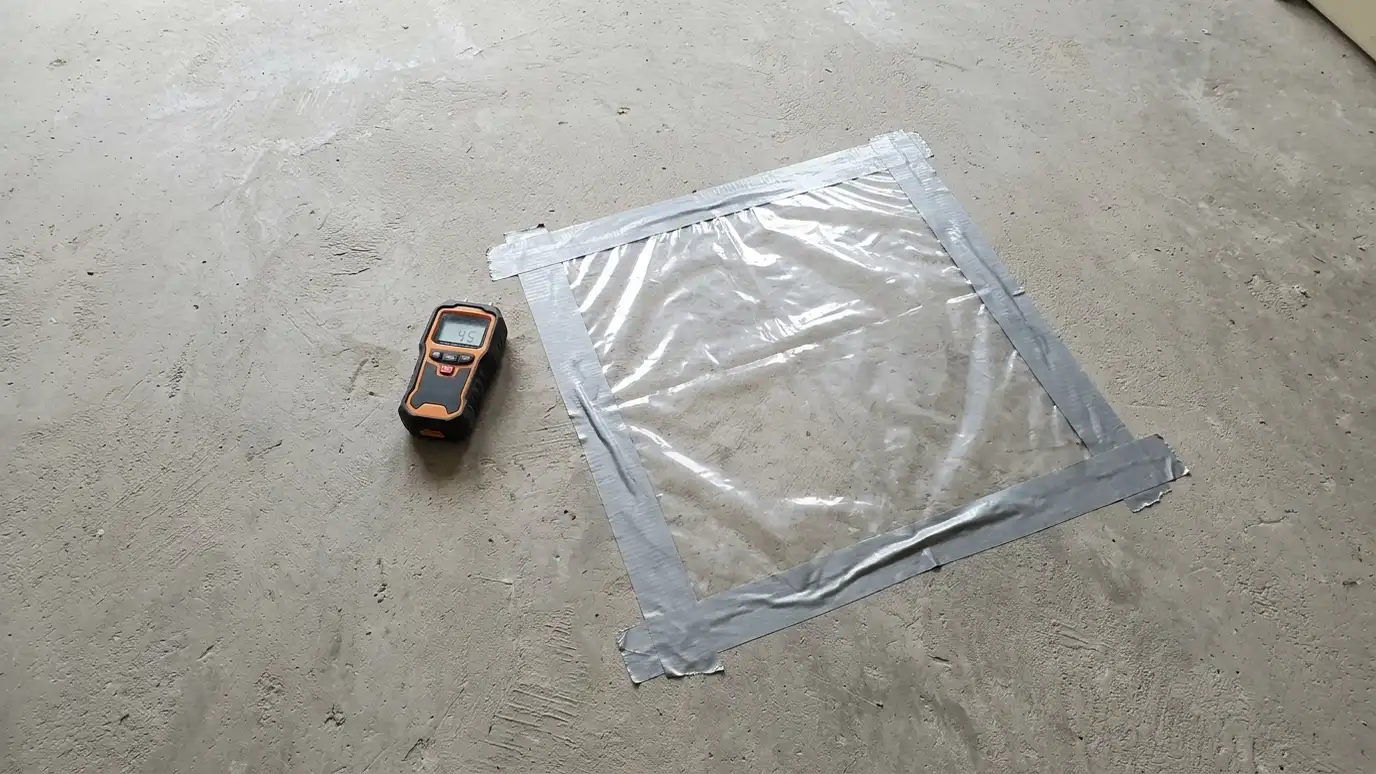 Concrete Moisture TestingConcrete moisture testing that checks for moisture vapor in the slab with plastic sheet, calcium chloride and in-slab…Explore
Tell us about your floor and we will call you back to set up a visit.
Or call (615) 357-7797 to talk now.