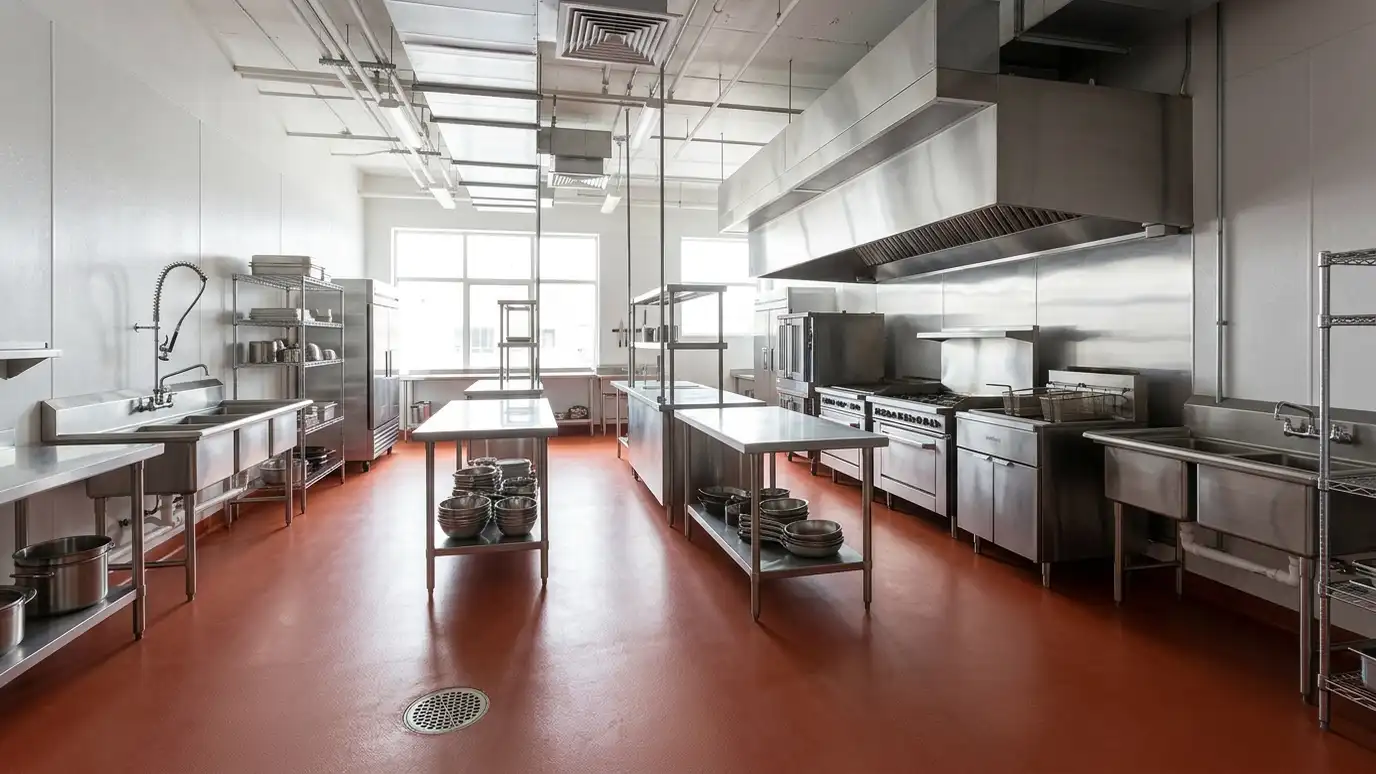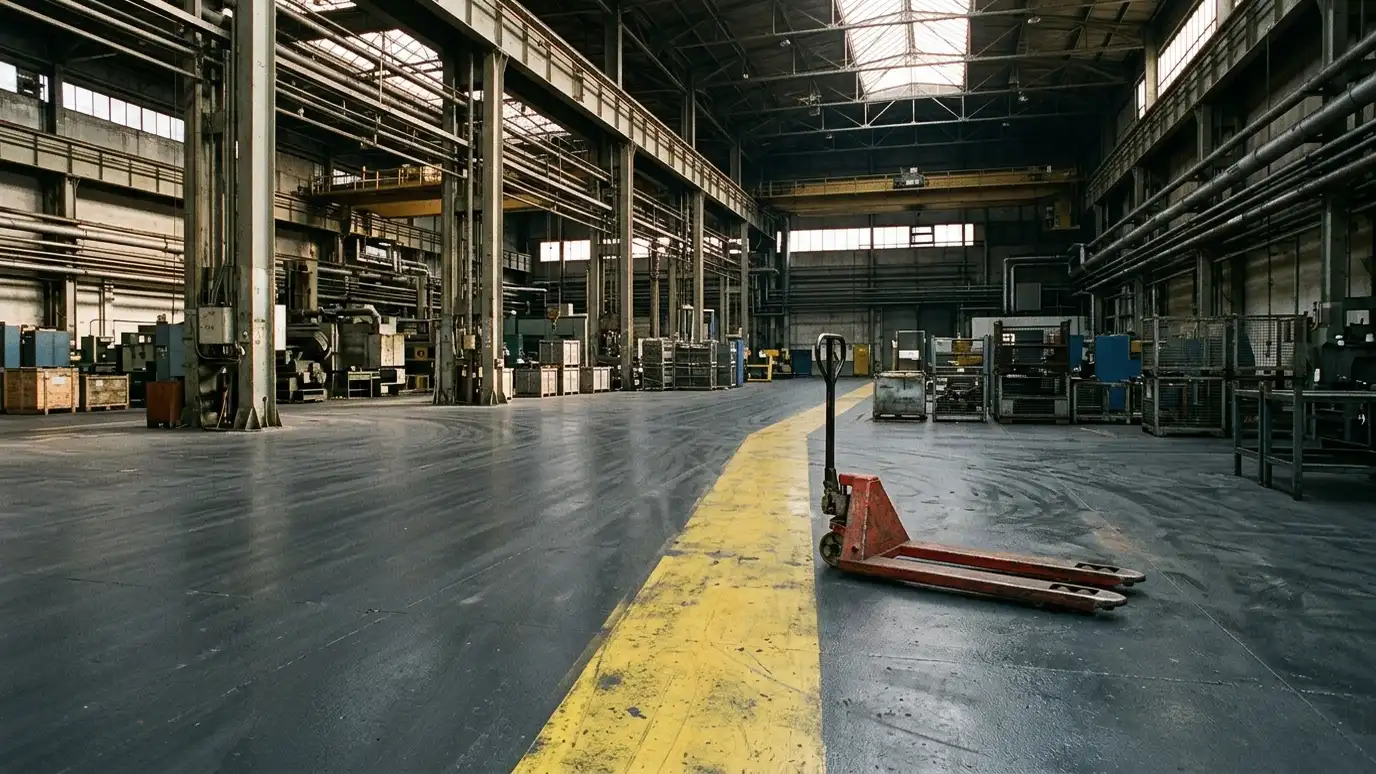
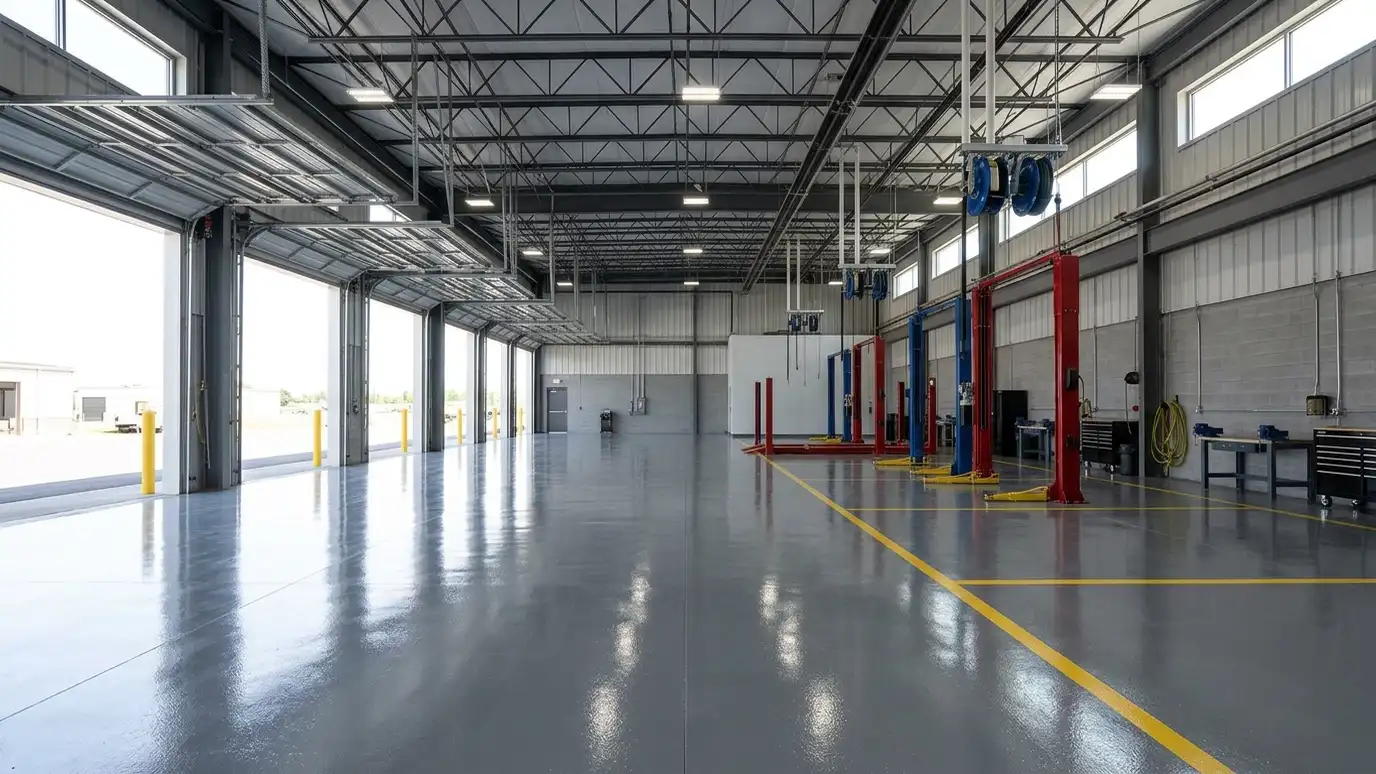
Start with the use
Wheels, loads, chemicals, washing, temperature and traffic decide the system. A showroom and a plant need different things.
Make a short list of the hardest things the floor must do.
The list guides everything else.
Match the system
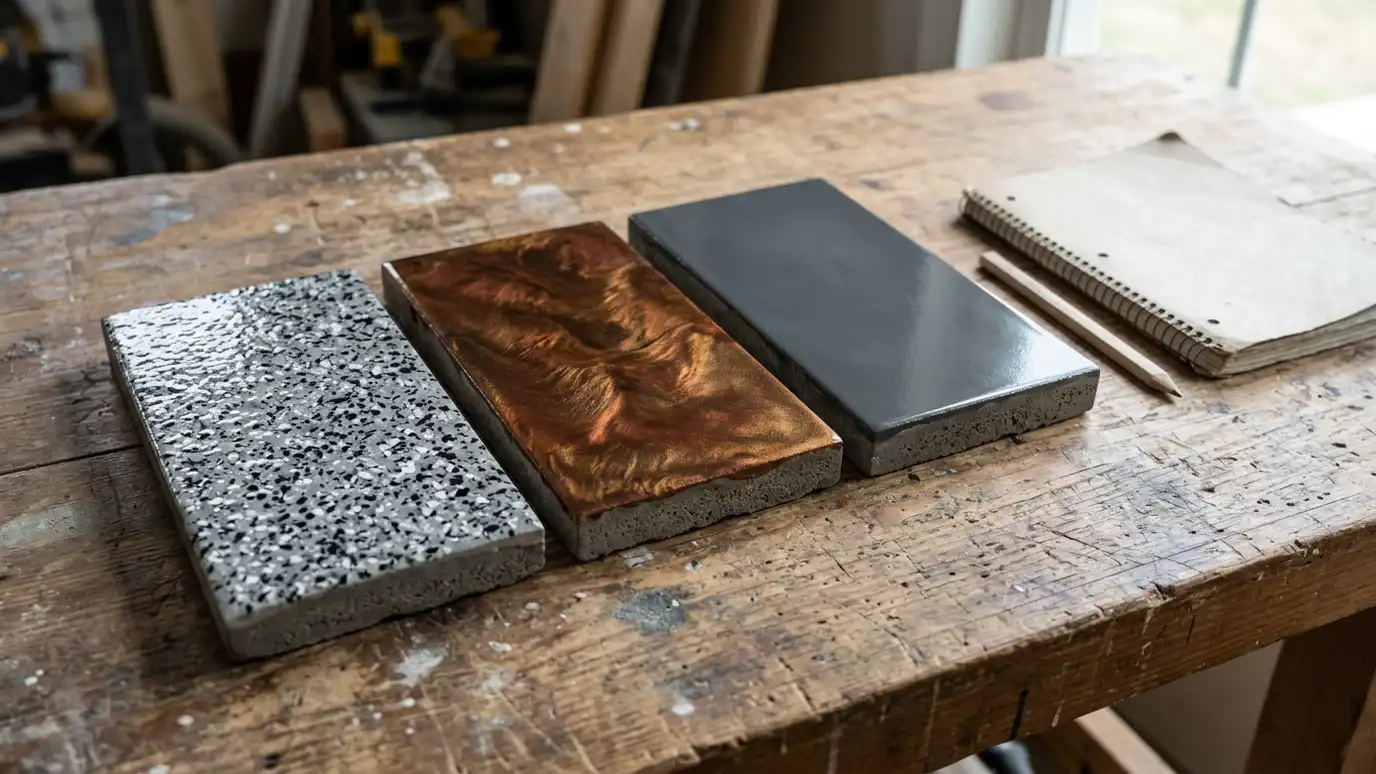
Thin-film, flake, aggregate and high-build systems each fit certain uses. Chemical-resistant topcoats suit shops and labs.
Ask for data sheets and product names.
Nashville businesses range from taprooms to hangars, so one size never fits.
Plan the downtime
Fast-curing coatings help, and phasing keeps part of the space working. Nights and weekends are options.
Plan deliveries, staff and storage around the schedule.
A written plan avoids surprises. We work with Nashville taprooms, shops, warehouses and showrooms, and each tends to want a different mix of grip, gloss and resistance.
Traction and safety
Texture, lines and zones help people and equipment move safely. Your safety professional decides what is needed.
We describe our options and finishes.
We do not give compliance advice. Busy Nashville workplaces often add extra texture at doors and drains, and then keep the main floor smooth.
Rules and approvals
Food service, health, fire and building rules come from your authorities. Ask them what applies before you choose.
We provide system information to share with inspectors.
Keep copies of approvals.
Care and maintenance
A cleaning routine and a yearly checkup protect the investment. Mats at entrances and pads under equipment help.
Plan for touch-ups in busy areas.
A care plan makes costs predictable.
Describe what the floor must survive, then choose the system, the schedule and the care plan to match.