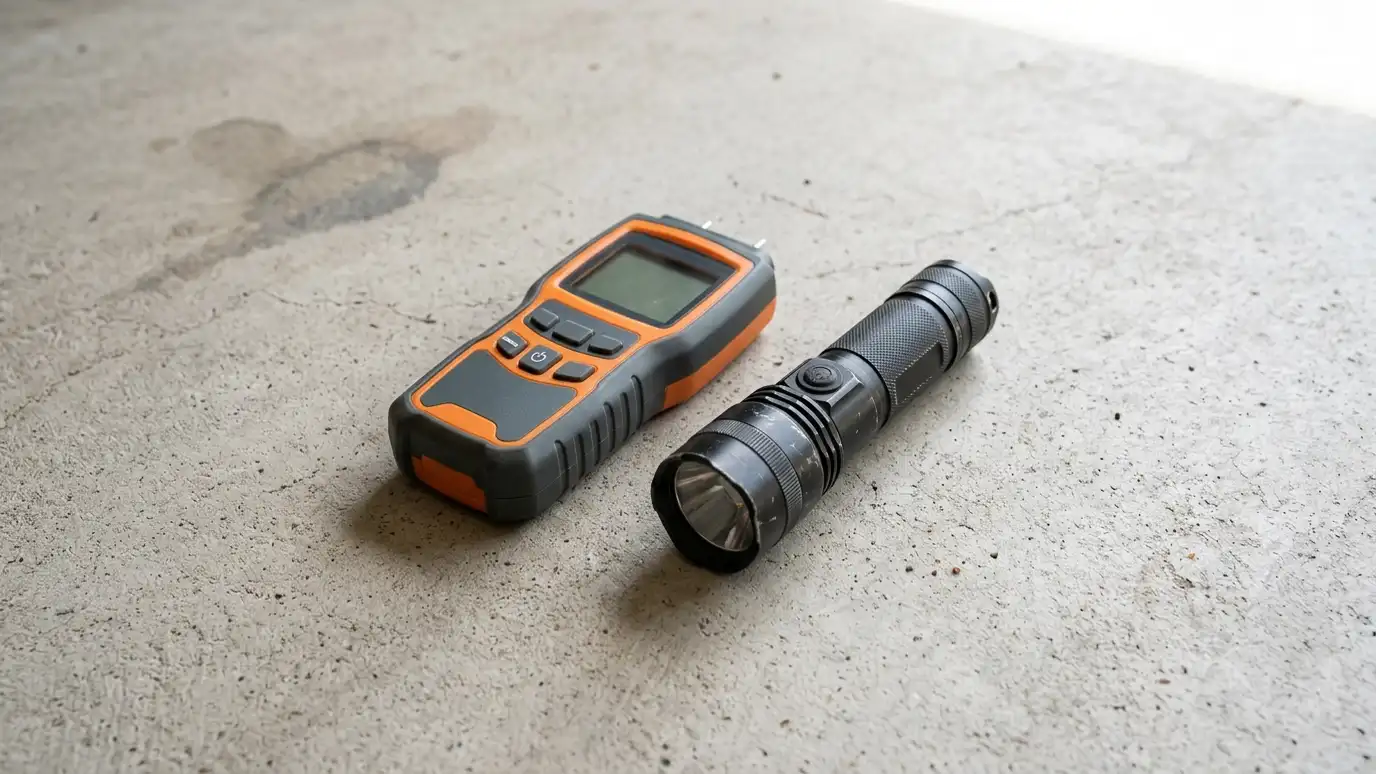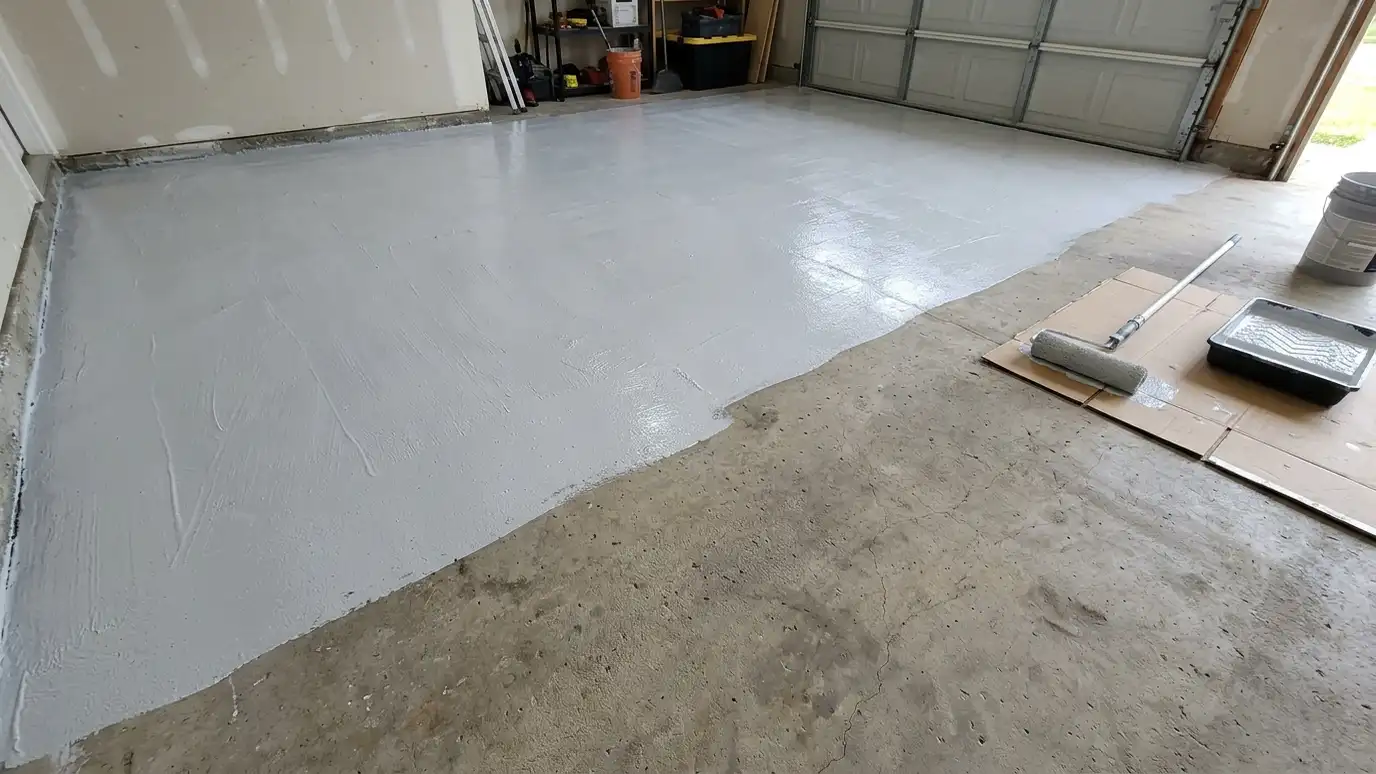
Moisture vapor mitigation that applies a moisture-blocking primer to concrete with elevated vapor emission so the coating system can bond and last.
When a slab pushes moisture vapor upward, a normal coating can bubble or lift. Moisture vapor mitigation uses a special primer, usually a high-solids epoxy-based system, that is applied over ground concrete to slow the vapor so the topcoats can bond. It is the right step when tests show elevated readings, when the slab sits below grade or when the ground around the house stays damp. Nashville basements and garages on wet clay soils see this often, especially after a rainy spring.
We start with testing so the primer matches the readings. After grinding, we apply the moisture primer in one or two coats to the thickness the maker calls for, sometimes with a broadcast of sand so the next coat grips. Only then do we build the flake or color system and the clear topcoat. We explain what a mitigation system can and cannot do: it manages vapor, but it is not a cure for water that is entering the slab from a leak or poor drainage, and we point you to drainage or waterproofing help if that is the real cause.
The primer is chosen after testing.
Thickness follows the maker's directions.
Flakes, color and topcoat go on over the primer.
Vapor control does not cure leaks or drainage problems.
The primer is chosen after testing, not before.
Thickness follows the maker's directions.
Sand can be added so the next layer bonds.
Flakes, color and topcoat go on once the primer is ready.
Vapor control is not a cure for leaks or drainage problems.
We tell you if water needs to be handled elsewhere.
Every topic has its own page with what to expect and how we approach it.
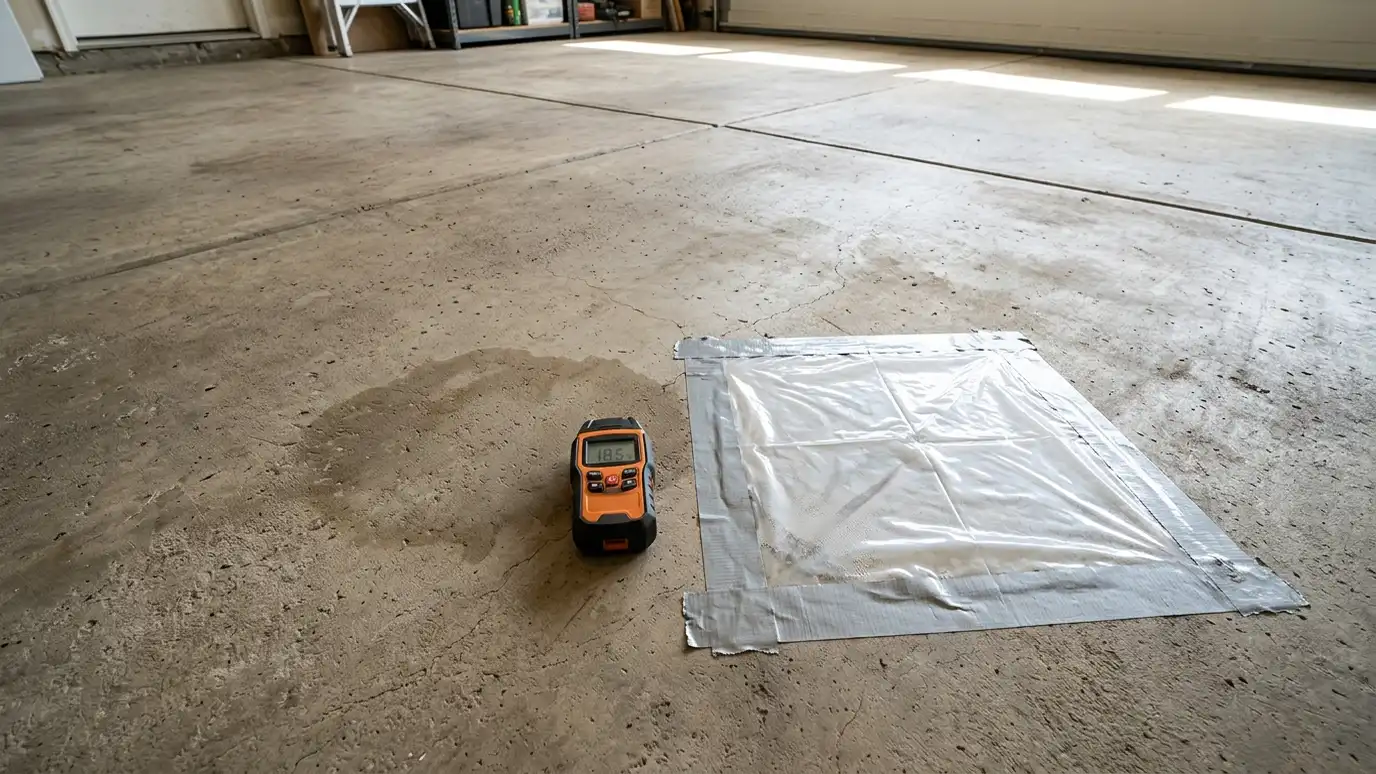 Comparison guideConcrete Moisture ExplainedHow moisture vapor moves through slabs, how it is tested and what it can do to a coating.Learn more
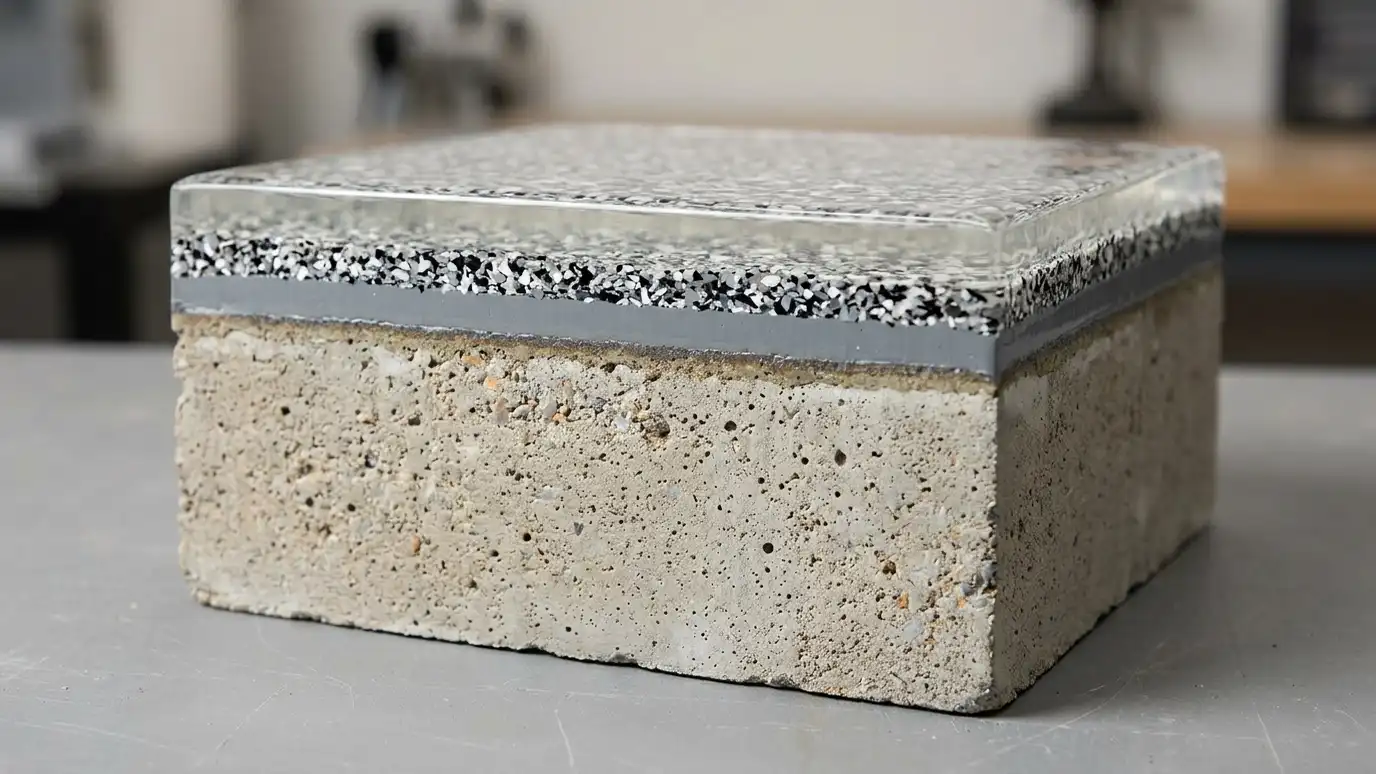 Comparison guideLayers and ThicknessHow primer, basecoat, flake and topcoat layers add up to a floor system, and why thickness and layer…Learn more
 ResourceSikaA construction chemicals company that makes flooring systems, sealants, waterproofing and concrete products.Learn more
Pick a concern, such as peeling, hot tire marks, stains, moisture or cracks, to get likely causes, what to try first and the service page that fits.
You tell us what you want to coat, how you use the space and what bothers you about the floor, and we set a visit.
We measure the floor, check cracks, stains and moisture, take photos and talk through colors and finishes.
You review samples, a design preview and a plain written scope with every layer and the schedule before anything is ordered.
We clear and protect the space, diamond grind the slab, repair cracks and joints and clean the surface.
We apply the basecoat, broadcast flakes or color and roll the clear topcoat, then give you a cure schedule.
We walk the finished floor with you, share a care guide and schedule a first checkup.
No. It is used when tests or site conditions show elevated vapor.
It slows vapor so coatings can bond. It does not fix liquid water from leaks.
Often yes, and basements are common candidates.
It adds a coat and cure time, which we include in the schedule.
We recommend fixing drainage first, since coatings cannot stop water that keeps coming in.
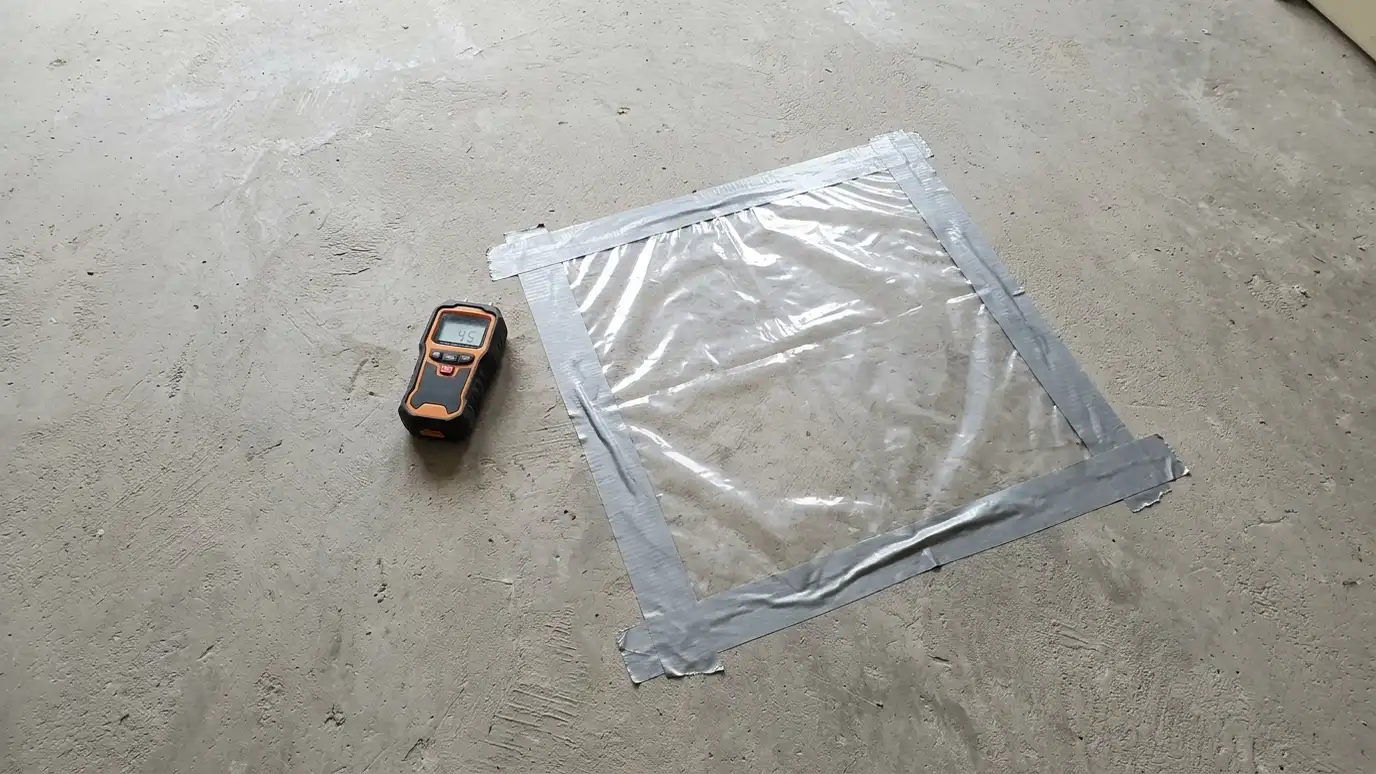 Concrete Moisture TestingConcrete moisture testing that checks for moisture vapor in the slab with plastic sheet, calcium chloride and in-slab…Explore
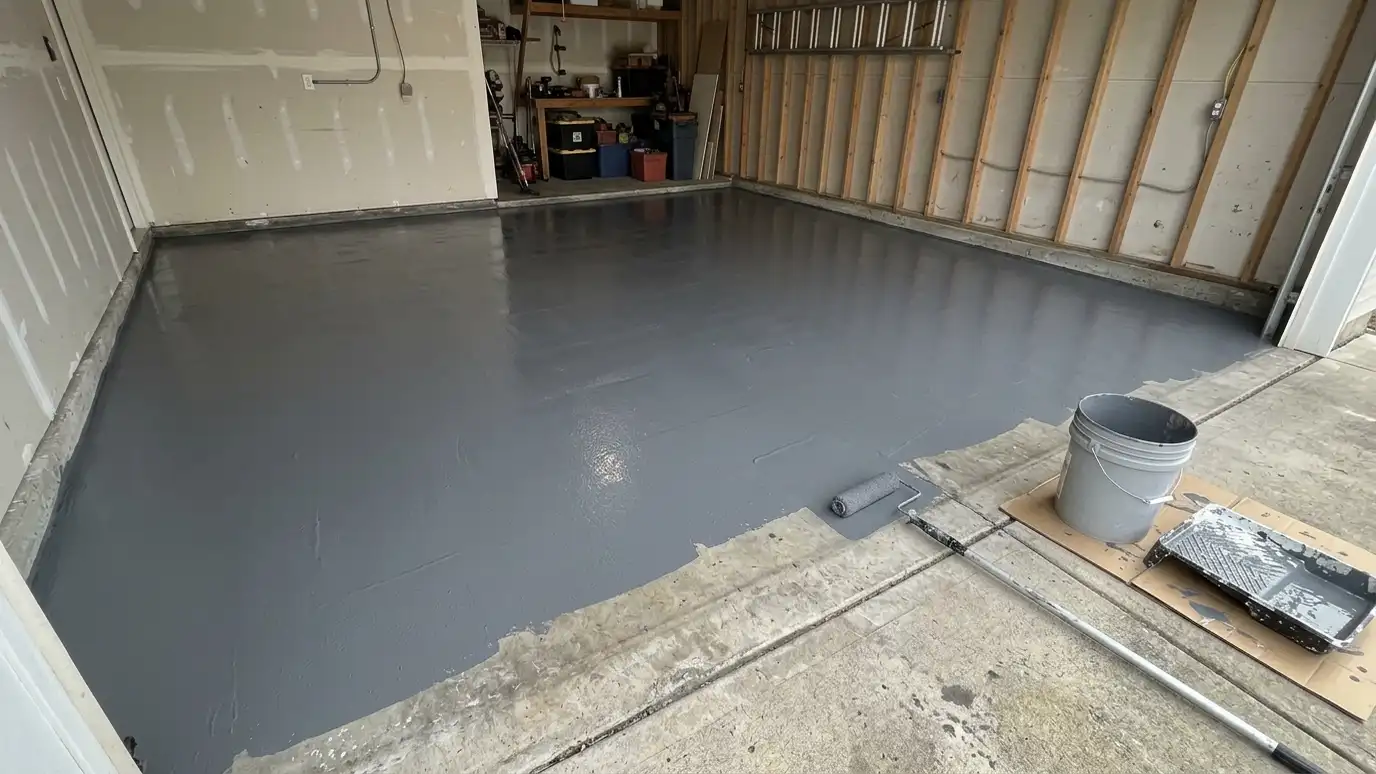 Polyurea Basecoat SystemsPolyurea basecoat systems that act as the strong foundation of a garage floor coating, bonding to ground concrete…Explore
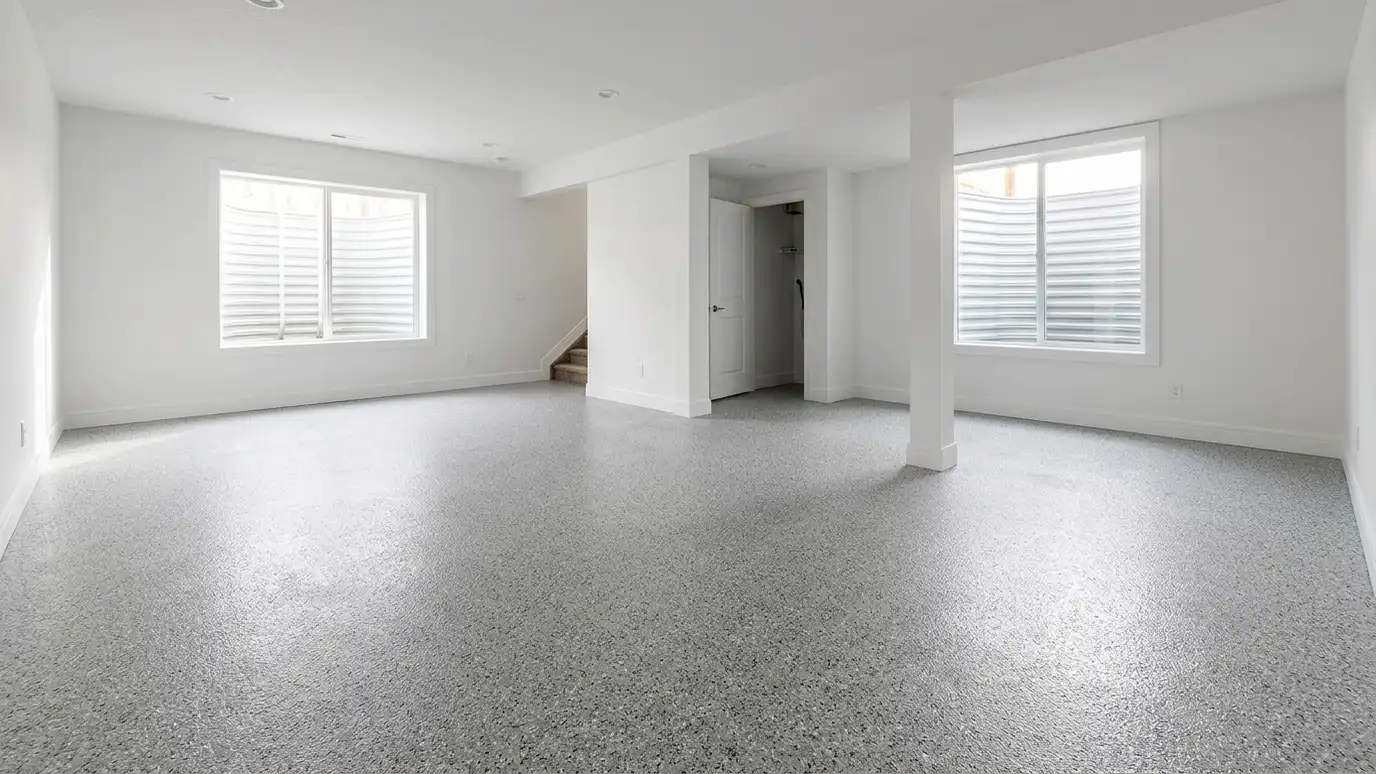 Basement Floor CoatingBasement floor coating that protects concrete with a seamless, easy-clean polyaspartic finish after moisture is tested and managed…Explore
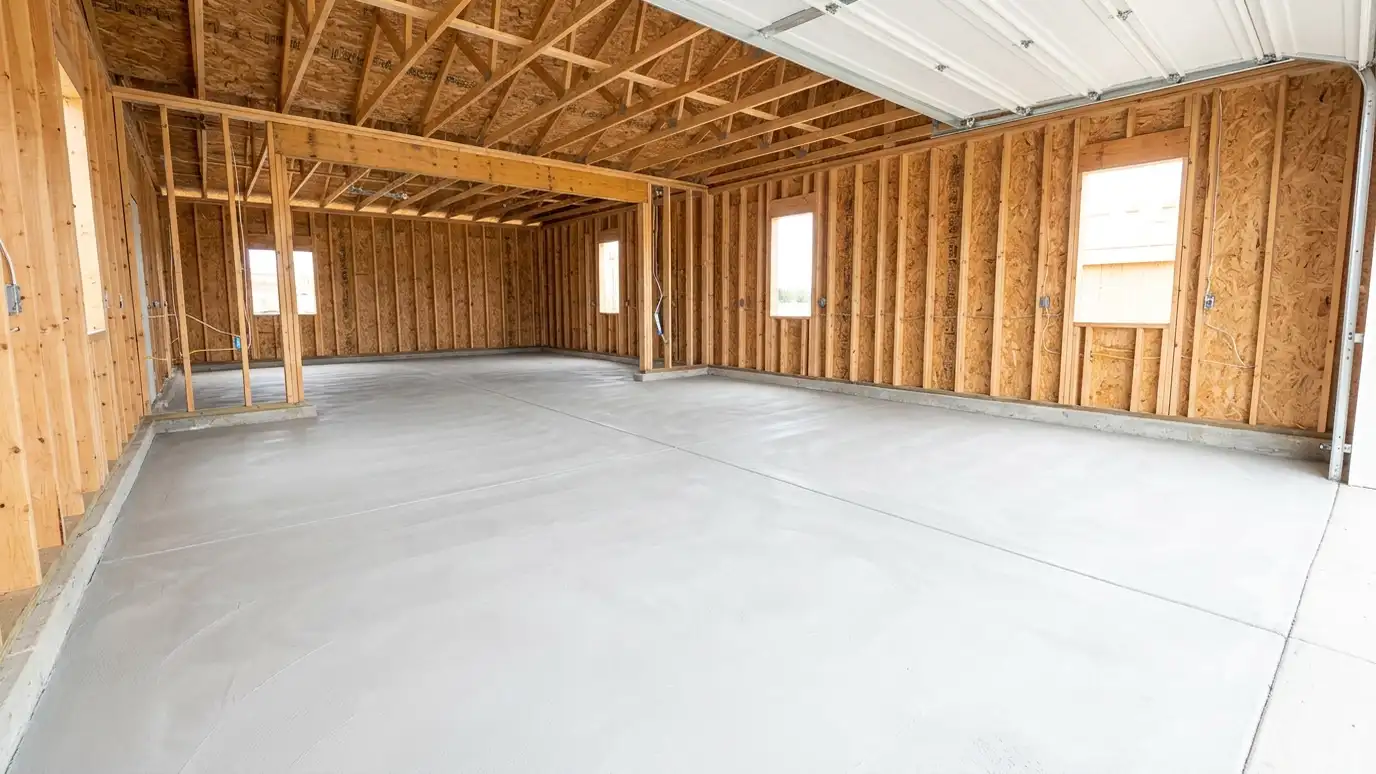 New Concrete Garage Floor CoatingNew concrete garage floor coating that waits for the slab to cure, tests moisture and preps the surface…Explore
Tell us about your floor and we will call you back to set up a visit.
Or call (615) 357-7797 to talk now.